

Sept. 4, 2025
Most people heading into the back-yards & jungles of Yucatan have some idea about the risks from the small brown or black scorpions whose sting makes your tongue go numb & causes days of pain, along with our poisonous snakes ( … Red-touches-Yellow kills-a-fellow coral banded snakes, Fer de Lance, Yucatecan Cantil, and our Hognosed Pit Vipers & Ratttlesnakes) … Yet most folks are unaware of our hazardous plants.
No doubt some of you have heard to use care when picking some variations of tasty chaya leaves, to avoid the skin irritations … yet how many readers are aware of our asp caterpillers, our p’oop’ox plants, and our Chechén trees?
Let’s start with the asp caterpillers .. aka “flannel moth caterpiller”, “furry puss caterpillar”, or “Megalopyge opercularis“
These nasty rascals can cause you days of extreme pain if you brush against one with bare skin, and take no remediation steps.
They come in different color variants here … yet ALL are just nasty.
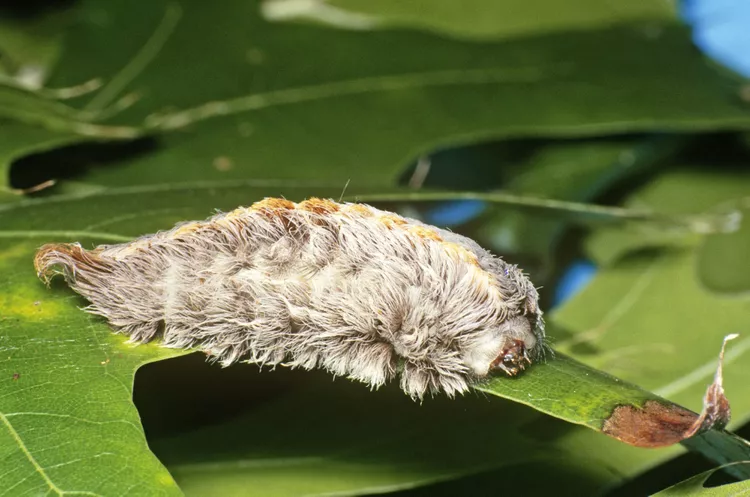
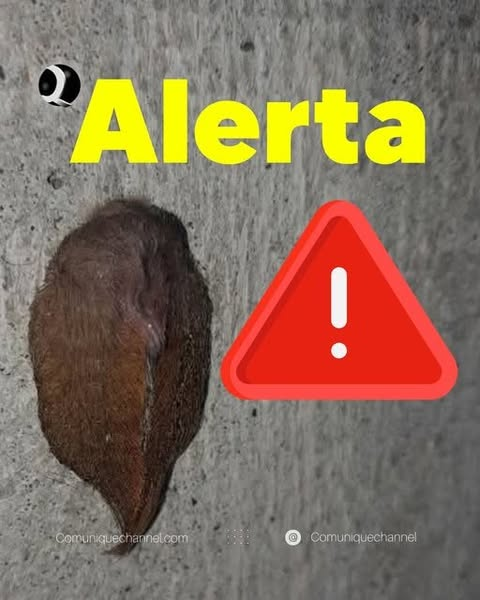
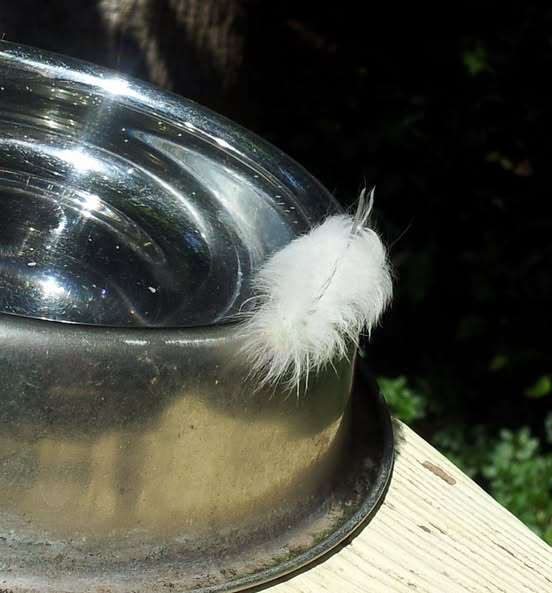
Do not touch them … the pain, burning & swelling are *awful* …
1. Remove hairs: Use adhesive tape to gently lift any embedded hairs from the skin.
2. Thoroughly wash the area with soap and water.
3. To reduce subsequent symptoms, apply an ice pack to help with pain and swelling, or use a hydrocortisone cream to alleviate itching and redness.
4. If the rash worsens or if you experience severe symptoms, seek medical help.
…
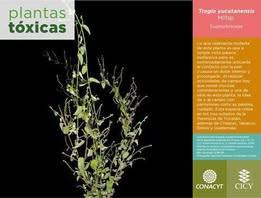
Next … The vine-like weed that Maya people call p’oop’ox.
If you go out to weedy areas or agricultural areas, rural areas, or on the edges of the jungle, there is a slightly-vine-like plant, called p’oop’ox in Maya, (Tragia yucatensis), whose leaves cause 15 – 30 minutes of intense burning if you touch them.
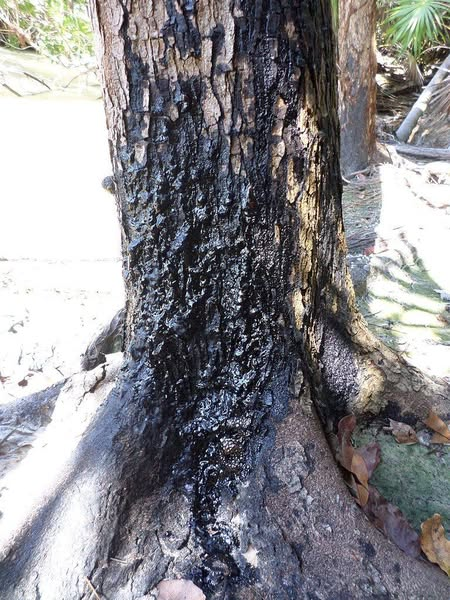
Next: Out in the jungles of Yucatan, we have the Chechén tree that has toxic sap, where touching the trunk of the Chechén tree ( Metopium brownei ), causes rashes & burning because it’s poisonous sap contains urushiol, the same irritant found in poison ivy, causing a severe, blistering rash upon contact.
When you encounter a typical mature Chechén tree here, it has no lower branches below about 15′ to 25′ – but touching the bark (esp. the sap) with bare skin is worse than poison ivy. The leaves also contain urusiol, but they are typically up high -not in contact with human skin.
The Chechén tree has a contrast of dark, ruffled leaves and a bright white bark with black sap running from its trunk. Remember the image below with the distinctive trunk & black sap.
There is a corresponding charming Maya story about the antidote for the Chechén tree, called the red-barked Chacáh tree (Bursera simaruba) … The nectar of the Chacáh tree contains chemical constituents that act as an antidote to the Chechén’s poison.
Maya stories say that these two trees “always” grow within a few yards of each other, leading to Mayan folklore that tells about a tragic love story between them
~ ~ ~ ~
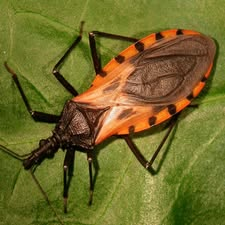
Next come the Triatomines ~ Reduvidae … Reduvid bugs … aka “Kissing Bugs”.
They live in the jungle, but also lurk up in thatched-roofs here. When they sense a sleeping victim below, they drop out of the thatch down onto the sleeping victim to suck their blood.
Too many of them carry the Chagas Disease parasite (Trypanosoma cruzi), that ultimately destroys our heart muscles.
The antiparasitic drugs benznidazole and nifurtimox (Lampit®) are very effective at killing the Trypanosoma cruzi parasite that circulates in our bloodstream, especially if the parasitic infestation is treated early.
~ ~ ~ ~
Finally, I am left describing a kind of ant, that I am still waiting for someone to give either a common name to … or Latin name for. There are some smallish back-yard ants here that swarm & bite – aggressively … As smallish ones, they are 2mm-3mm long => not tiny, not super fast, with sturdy bodies that are dark reddish brown in color. Maybe someone can reply with their name. In over 35 yrs here, I have never encountered them inside a home, but they do like our back yards here.
If attacked, you should quickly brush or flush them off, and scoot out of their territory … and then wash the affected area. Because the pain of their bites comes from Formic Acid, baking soda can help with the pain & burning sensations in severe cases.
and … as Dermatologists often recommend, if you are having allergic reactions or unusual swelling, Benedryl creme or Caladryl lotion can help.
Cheers …
Dr. Steven M. Fry
* * * *
Feel free to copy while giving proper attribution: YucaLandia/Surviving Yucatan.
© Steven M. Fry
Read on, MacDuff.
 Surviving Yucatan