Curious about some of the ways Mexico is so very different from the USA & Canada … differences that become apparent as you learn Mexican Spanish? … Dichos (common sayings) are one way to get a peek inside how Mexicans see the world.
See how many you get. I’ll start out with 2 easy ones:
>>> … ~ “Aunque la mona se vista de seda, mona se queda.” ~ …
“Even though the monkey dresses in silk, it’s still a monkey.”
>>> … ~ “El que es perico donde quiere es verde.” ~ …
“For the one who’s a parrot .. where-ever they are … it’s green.”
>>> … ~ “No le busques tres pies al gato.” ~ …
“Don’t look for 3 feet on the cat.”
>>> … ~ “Camaron que se duerme, se lo lleva la corriente.” ~ …
“The shrimp that falls asleep, gets carried away by the current.”
>>> … ~”Dime de qué pie cojeas.“~
“Tell me which foot you limp on.”
… The monkey dressing in silk dicho is obvious, along with the parrot finding green anywhere it’s at.
Three feet on the cat? … Don’t overcomplicate things.
Sleeping shrimp carried away by the current, are people who miss opportunities by not paying attention.
Which foot do you limp on … Tell me what your real intention is … or Tell me your weakness.
There are a number of payments (Finiquito, Aguinaldo & Vacation pay, plus several others) owed when you fire a housekeeper or gardener domestic worker in Mexico.
It can be helpful to have some sense of the legal terminologies used, before you talk with a Labor Attorney, so I share the following educational post, not as legal advice, but as a starting primer to help understand Mexico’s somewhat complex system of payments when you fire a domestic worker:
Here’s one example of one (anonymous) fellow’s descriptions of the Ley Federal de Trabajo’s requirements, with helpful explanations. Again, this is NOT meant to be legal advice, not is it the last word on how to fire a domestic worker … It’s just an educational “jumping-off” point:
” Mexico’s Ley Federal del Trabajo (Federal Labor Law or LFT) … is famously pro-worker, and household employees (domestic workers) enjoy the exact same labor rights as corporate employees.
Because you are dealing with unpredictability rather than a legally defined “just cause” (which under Article 47 requires severe misconduct like theft or more than three consecutive unexcused absences), letting her go will legally be classified as a termination without just cause.
To handle this cleanly, protect yourself from future disputes, and part ways amicably, you will want to understand the framework below.
1. The Legal Framework: Finiquito vs. Liquidación When you terminate an employee without just cause in Mexico, you cannot simply pay for time worked. You are legally required to pay a combination of Finiquito (accrued benefits) and Liquidación (severance).
Because she only works one half-day a week, all calculations must be based on her Daily Wage (Salario Diario).To find this, take her weekly pay and divide it by 7 (not by 1 or the hours worked). For example, if you pay her $400 pesos for her Tuesday shift, her legal daily wage is: $400 / 7 = $57.14 pesos per day.
The total package she is owed consists of:
The Finiquito (Accrued Benefits) You owe this regardless of why an employee leaves:
Prorated Aguinaldo (Annual Bonus): A minimum of 15 days of salary per year, prorated as a percentage of the year, for the weeks worked so far in 2026. For a 52 week year, an employee who works 13 weeks then gets 25% of the whole year’s Aguinaldo.
Prorated Vacations & Vacation Premium (Prima Vacacional): Based her number of years of seniority, she is entitled to a legally stipulated number of vacation days per year, plus a 25% bonus.** You owe any unused days plus the mandatory 25% cash premium on those days, prorated for this year.
Vacation pay starts with a basic minimum payment of 12 days of Daily Rate pay, plus a 25% bonus.** … => Daily Rate pay x 1.25 x # of Vacation Days. Vacation pay also includes additional pay for more than 1 year of working for you.
**Further, as of 2023, Mexican labor law requires employers to pay a vacation premium, a bonus of **at least 25 percent of the base salary**, so that vacation days are paid at a 125 percent salary rate at a minimum:
1st year – 12 days of Daily Rate pay** 2 years – 14 days 3 years – 16 days 4 years – 18 days 5 years – 20 days 6 to 10 years – 22 days 11 to 15 years – 24 days 16 to 20 years – 26 days 21 to 25 years – 28 days 26 to 30 years – 30 days 31 to 36 years – 32 days
Unpaid Days: Any days worked in the current pay cycle that haven’t been paid.
The Liquidación (Severance) Because this is a termination without just cause, you legally owe:
3 Months of Salary: 90 days of her calculated daily wage.
20 Days of Salary per Year worked: For 6 years of service, this equals 120 days of salary.
The Prima de Antigüedad: Seniority Premium: The Prima de Antigüedad (12 days per year) is technically only mandatory for employees with 15+ years of service or those terminated without cause. However, labor lawyers almost universally recommend including it in a severance package to ensure the termination agreement stands up in court.
The Practical Reality: Mutual Agreement: While the math above represents the strict letter of the law, the overwhelming majority of domestic worker terminations in Mexico are settled via a Mutual Agreement (Mutuo Consentimiento) under Article 53.“
What Happens When No IMSS Payments Have Been Made: Not having registered her with IMSS (Instituto Mexicano del Seguro Social) significantly changes the dynamics and raises the stakes.
Since late 2022, enrolling household workers in IMSS has been mandatory by Mexican law, even for part-time workers who only work one day a week. Because of this, she holds a very strong position if she decides to go to the local labor board (Centro de Conciliación Laboral). If a formal dispute arises, the labor board could force an employer to retroactively pay all missed IMSS quotas for the entire 6 years, plus hefty fines and surcharges.
However, do not panic. This is an incredibly common scenario in Mexico, and it simply means you need to prioritize an amicable, cash-settled mutual agreement next week.
The Risk Strategy: Why a Good Package Matters Now: When a worker has not been on IMSS, the goal of the termination package changes. It is no longer just about giving her what is strictly owed; it is about purchasing your peace of mind and legal safety.
If you offer a bare-minimum Finiquito (just prorated vacations and Christmas bonus), she may feel slighted, go to a labor advisor, and realize she can claim 6 years of backdated social security.
To prevent this, you want to offer a package that feels incredibly fair and generous to her, making her eager to sign a waiver and move on.
Recommended Action Plan:
1. Sweeten the Severance Offer Instead of fighting over the strict legal 3 months + 20 days per year calculation (which would be very high), structure an offer that represents a solid cash cushion for her part-time income.
A highly effective strategy is to offer her standard accrued benefits (Finiquito) plus 3 to 4 months of her regular weekly pay as a lump-sum severance.
For example, if she makes $400 pesos every Tuesday, offering her the accrued benefits plus a flat $5,000 or $6,000 pesos as a “thank you and transition fund” usually ensures an amicable handshake.
2. The Golden Rule: Do Not Mention the “I-Word” During your conversation with her, focus purely on the schedule changes, household needs, and her frequent absences.
Do not bring up IMSS or registration. (Editor’s Note: ???)
Frame the extra money you are offering as a gesture of goodwill, appreciation for her 6 years of help, and a desire to support her family through this transition.
Draft a Airtight “Convenio de Terminación” (Termination Agreement): Because she is not registered with IMSS, having a signed, physical document is your only real shield. The agreement must be written in Spanish and explicitly state:
1 That the relationship is ending by mutual consent (mutuo consentimiento) under Article 53, Fraction I of the Ley Federal del Trabajo.
2 A clear breakdown of the money being handed over (Labeling it as Gratificación voluntaria or Finiquito/Indemnización).
3 A strict “release of liability” clause stating that no past debts, wages, benefits, or social security obligations exist, and that she grants the most absolute release of liability known to law (el finiquito más amplio que en derecho proceda).
4. Date & Sign, (in ink), and 2 Witnesses**
When you hand over the cash: Have her sign next to her typed name, on the clearly dated document.
Crucially, have her press her right thumb into an ink pad and place her thumbprint directly next to her signature on every single page. In Mexican labor disputes, signatures are frequently contested, but a thumbprint is legally binding and incredibly difficult for a labor lawyer to challenge.
**Have two people (friends, neighbors, or family members) sign as witnesses (testigos).
Most part-time household workers in this situation prefer a quick, respectful conversation and a solid lump sum of cash over a drawn-out legal process. If you approach next week’s meeting with empathy, clarity, and a fair cash settlement in hand, she will likely sign the paperwork gladly.“
Again, this report is NOT meant as legal advice, as it is just a fun FB post, extracted & copied simply as starting point for understanding the kinds of payments that may be owed when someone chooses to fire their Mexican domestic worker.
It’s best to seek legal advice from a good labor lawyer on these issues.
Under Mexico’s new traffic laws, Mexico’s National Guard are now the top-cops on Federal highways, and they are now allowed to FINE and even arrest drivers and passengers on Federal Highways.
By official decree, the National Guard now has the power to fine you and apply sanctions if you break the traffic regulations for federal highways and bridges. In this way, agents will also be able to hand out both written and verbal warnings.
Yet, if the driver “confesses” (agrees to) the violation to the Guardia Nacional at the time, the fine amount can be reduced by 25 percent. In addition, an additional 25 percent discount will be given if it is paid within the first 15 business days.
According to the new reforms to our REGLAMENTO DE TRÁNSITO EN CARRETERAS Y PUENTES DE JURISDICCIÓN FEDERAL, (Traffic Regulations on Highways and Bridges of Federal Jurisdiction published in the DOF, the Ministry of National Defense and the National Guard will be the party in charge of ensuring that drivers comply with our national traffic laws, on federal roads.
What are the new fines and penalties that the National Guard can provide?
/ Penalties for Disobedience and Resistance: One of the reforms is the criminalization of Contempt of Authority … that can end in immediate arrest, according to Article 201.
Examples of contempt include a driver refusing to hand over the driver’s license and the circulation card … or that he or passengers make threats, insults … or is aggressive with to the officers.
It states that the National Guard will proceed to immediately arrest present the person responsible to the Public Prosecutor’s Office.
/ Fines for Failure to Comply with Orders and Control: “The signals from members of the National Guard prevail over the devices for traffic control and any other applicable rules,”
The penalties are a total of 40 to 50 times the daily quota of the Unit of Measurement and Update (UMA), which in 2026 is equivalent to $117.31 pesos, which gives fines ranging from $4,692.4 pesos to $5,865.5 pesos.
/ Penalties for the Condition of the Vehicle: According to Article 80, transit is only allowed for vehicles that have an “ideal physical and mechanical condition,” which ensures their proper operation.
If a traffic “event” derives from the failure of the brake system, a penalty will be imposed, after the authorities have carried out the verification.
The general fine for violating the physical-mechanical conditions results in a fine of 20 to 30 UMAs, which ranges from $2,346.2 pesos to $3,519.3 pesos.
Drivers who, due to mechanical failure or lack of fuel, do not apply safety measures such as using the shoulder and placing safety triangles will be fined 10 to 20 UMAs ($1,173 – $2,346 pesos).
/ Penalty for Driving Under the Influence of Alcohol or with Other Substances: The National Guard will begin testing drivers for “intoxicating substances”. According to Article 93, drivers must take tests for “the intake of alcohol, psychotropic substances and narcotics when requested”.
If a driver opposes the tests or tests positive, the agents will proceed to arrest him and transfer him “to the nearest competent authority”.
/ Not Having Documents or Service Logs: For federal and private motor transport, the authorities will impose a fine of 20 to 30 UMAs ($2,346.2 pesos to $3,519.3 pesos); Additionally the circulation card must be submitted at all times for review if requested.
However, Article 86 B sets forth an exception to the penalty, since the lack of license plates or circulation card will not be infringed if a ministerial record is presented for theft lost in less than 15 days, as well as the proof of replacement procedure of more than 30 days.
/ Discounts on Fines Imposed by the National Guard: The official decree describes economic incentives for those who fail to comply with federal traffic regulations.
If the driver “confesses” (agrees to) the violation to the Guardia Nacional at the time, the fine amount can be reduced by 25 percent. In addition, an additional 25 percent discount will be given if it is paid within the first 15 business days.
We’re moving closer to the JUNE 1, 2026 kickoff of Hurricane Season, so, it’s worth a look at the current forecasts.
Historical Top Performing Colorado State University’s Atmospheric Sciences Dept Summary:
“2026 Forecast Summary” “We anticipate that the 2026 Atlantic basin hurricane season will have somewhat below-normal activity. Current weak La Niña conditions are likely to transition to El Niño in the next few months, with the potential for a moderate/strong El Niño for the peak of hurricane season.
Sea surface temperatures in the western tropical Atlantic are warmer than normal but slightly cooler than normal in the eastern and central tropical Atlantic. We anticipate El Niño being the dominant factor for the upcoming hurricane season, driving increased levels of tropical Atlantic vertical wind shear.
We are forecasting a BELOW-AVERAGE probability for MAJOR hurricane LANDFALLS along the continental United States coastline and in the Caribbean. As with all hurricane seasons, coastal residents are reminded that it only takes one hurricane making landfall to make it an active season. Thorough preparations should be made every season, regardless of predicted activity.“
NOAA / NASA / NWS now concur with the CSU experts: “The agency is forecasting a total of 8-14 named storms (winds of 39 mph or higher). Of those, 3-6 are forecast to become hurricanes (winds of 74 mph or higher), including 1-3 major hurricanes (category 3, 4 or 5 with winds of 111 mph or higher).”
“Forecasters with NOAA’s National Weather Service are predicting a below-normal hurricane season for the Atlantic basin this year.” May 21, 2026:
The Days When the Shadows disappear from our Light Poles & Vertical Walls:**
We’re headed into our worst – hottest week(s) of days on Merida, Yucatan’s Centro streets. For the next 11 days (today through May 30, 2026) Merida Centro’s East-West running ASPHALT & CONCRETE canyon streets will be BAKING in the year’s worst Sun.
During this 11 day span in Merida, our Sun is basically directly overhead at solar noon (12:55) – blasting Centro’s E-W streets from 10AM to 4 PM … with theyear’s HIGHEST UV levels … due to the Sun’s rays travelling through the SHORTEST paths through our atmosphere in the 2 hours around solar noon.
10:00 AM through 4:00 PM will be ~brutal~ on Merida Centro’s asphalt & concrete canyon E-W streets.
Our normal longer sunlight paths (through more atmosphere) has the atmosphere absorbing more UV & creating less heat in Merida Centro’s asphalt & concrete canyon E-W streets when the Sunlight’s pathlengths are long through the atmosphere.
May 20’th the Sun reaches a brutal 89.1º elevation at 12:55 …
May 21’st the Sun reaches 89.3º elevation at 12:55 …
May 22’nd the Sun reaches 89.5º elevation at 12:55 …
May 23’rd the Sun reaches 89.7º elevation at 12:55 …
May 24’th the Sun reaches a near WORST 89.89º elevation at 12:55 …
… May 25’th the Sun reaches it’s WORST 89.92º elevation at 12:55:30 …
… May 26’th we get a tiny bit of relief when the Sun reaches just 89.75º elevation at 12:55:45 …
May 27’th we get a tiny bit of more relief when the Sun reaches just 89.58º elevation at 12:56:00 …
…
**Our local Maya peoples monitored this special set of days by digging a well with perfectly vertical sides … and the 2 days of the year when the bottom of the well was illuminated … marked those days when the sun is directly overhead at midday – Solar Noon.
…
Solar System Notes: Basically from May 20 through July 20’th the Sun goes EXCLUSIVELY in the Northern Skies of Yucatan every day … which means pretty much ALL solar panels in Yucatan are POINTED IN THE WRONG DIRECTION (pointing South) for 3 months of the year, because Merida is in the Tropics (south of the Tropic of Capricorn 23º N) …
For this reason, ONLY the highest efficiency PV solar systems have motors & swivels to track the Sun’s path, by swinging around to point NORTH at this time of year (NE in the mornings … N at solar noon, and pointing NW in the afternoons) gaining an addtional 40% of energy versus fixed position panels.
Next: THE 2026 day when our electrical poles, street lights & perpendicular walls cast no shadows?
After tomorrow’s Spring Solar Equinox, the next big day for Sun watchers here is March 25, 2026 … when the Sun reaches it’s highest elevation of 89.92º – directly overhead – at 12:55 24 sec PM
May 19, 2026 12:54 pm Midday sun maximum @ 88.89º Elevation
May 20, 2026 12:54 pm Midday sun maximum @ 89.12º Elevation
May 21, 2026 12:55 pm Midday sun maximum @ 89.32º Elevation
May 22, 2026 12:55 pm Midday sun maximum @ 89.52º Elevation
May 23, 2026 12:55 pm Midday sun maximum @ 89.71º Elevation
May 24, 2026 12:55 pm Midday sun maximum @ 89.9º Elevation
~~ => May 25, 2026 12:55 pm Midday sun maximum @ 89.92º Elevation~ ~~
May 26, 2026 12:56 pm Midday sun maximum @ 89.75º Elevation
… And yes, ancient Yucatec Maya people tracked that special day when the Sun is directly overhead, by recording when the bottom of a special perpendicual well was perfectly illuminated by the mid-day sun, directly overhead …
2026’s Spring Equinox happens a bit earlier this year, tomorrow (3/20/2026) at 8:46 AM local time in Merida.
Chichen Itza is scheduled to be open for viewing of the famous snake descending on El Castillo’s stairway, (but local vendors may cause problems) … Dzibilchaltun will be closed to visitors & Oxkintok will also be closed.
~ On a Personal Note: If you’re ever curious about what direction due East is from your home, check out the Sun’s position at 8:46 local time …. because our Sun will be due East at that point.
Then, for every other day between 3/21 – 9/22, the sun rises in the Northeast and sets in the Northeast, because our 2026 Fall Equinox doesn’t happen until 6:04 PM on Sept. 22.
… Other Curiousities: For home solar system owners, notice that your panels pointing due-South will be pointing away from the early morning sun and late afternoon sun for the next 6 months.
For this reason, the highest efficiency PV solar systems have motors & swivels to track the Sun’s path, gaining an addtional 40% of energy versus fixed position panels.
…
Next: THE 2026 day when our electrical poles, street lights & perpendicular walls cast no shadows?
After tomorrow’s Spring Solar Equinox, the next big day for Sun watchers here is March 25, 2026 … when the Sun reaches it’s highest elevation of 89.92º – directly overhead – at 12:55 24 sec PM
and yes, the shadows for some (slightly canted) poles & walls will have no shadows starting around May 19, 2026:
May 19, 2026 12:54 pm Midday sun maximum @ 88.89º Elevation
May 20, 2026 12:54 pm Midday sun maximum @ 89.12º Elevation
May 21, 2026 12:55 pm Midday sun maximum @ 89.32º Elevation
May 22, 2026 12:55 pm Midday sun maximum @ 89.52º Elevation
May 23, 2026 12:55 pm Midday sun maximum @ 89.71º Elevation
May 24, 2026 12:55 pm Midday sun maximum @ 89.9º Elevation
~~ => May 25, 2026 12:55 pm Midday sun maximum @ 89.92º Elevation~ ~~
May 26, 2026 12:56 pm Midday sun maximum @ 89.75º Elevation
… And yes, ancient Yucatec Maya people tracked that special day when the Sun is directly overhead, by recording when the bottom of a special perpendicual well was perfectly illuminated by the mid-day sun, directly overhead …
Have you ever wondered just what’s really going on off-shore … just beneath the waves?
The international CETI program (Cetacean Translation Initiative)** … as a collaboration between Swedish scientists with their UC Berkeley colleagues ave been doing some pretty cool stuff, tracking & recording whales … and DECODING whale’s language.
UC Berkeley Linguistics Professor Gašper Beguš, the linguistics lead at Project CETI offers some insights: “In the past, researchers thought of whale communication as a kind of morse code,”
“However, this paper shows that their calls are more like very, very slow vowels. This suggests a complexity that approaches human language.”
” (The) spectral properties (of whale languages) are highly structured, discretely distributed across codas*, and uttered in DIALOGUES “
* ” (Whale) Codas are on many levels analogous to human vowels and diphthongs and can be conceptualized in terms of the source-filter theory: vowel duration and pitch correspond to the number of clicks and their timing (traditional coda types), while spectral properties of clicks correspond to formants in human vowels. “
An AI Breakthrough: Machine learning analyzed 8,000 hours of Hump-backed whale recordings from underwater microphones spanning three oceans. … CETI’s AI system identified recurring patterns … syntax rules … and even contextual variations similar to human language.
Specifically, whales use “phonemes” … combined into “words” that form “sentences” with identifiable meanings.
A phoneme is a voiced sound … the smallest unit of speech-sounds that distinguishes one word from another … like b and p in “bat” and “pat”. … English has approximately 44 unique phonemes (24 consonant and 20 vowel sounds).
The joint research shows that whale vowels feature the SAME vowel features (differing length, timing, frequency and trajectory characteristics) that mirror human language … and … In human speech, these differing/changing vowel-characteristics carry meaning. … so, it’s highly-likely that the same is true for Sperm whales … and Humpbacks … because, why would super-intelligent whales just randomly add so many specific vocal twists & vocal gymnastics, without having some meaning or purpose?
Here’s somewhat hokey FB meme (where they claim “Sweden”, versus the TRULY collaborative international CETI program) … as a promo, that downplays US scientists’ contributions. (???)
/
FURTHER Discoveries about Whale Information Exchanges: ~ Whales use warning calls about predators … transmitted over 1,000 km;
~ Whales send out individual mating advertisements containing the individual’s “name”; (What about pickup lines ??)
~ They send navigational information about food sources; and
~ They SING …. cultural songs …. passed down through generations. and yes, their songs have with regional variations.
~ Various whale populations also have distinct “accents” … akin to human dialects.
~ Individual whales remember their personal songs from year to year … and repeat them … suggesting cultural and possibly history-keeping.
~ Some song elements remain unchanged for decades => culture(?) that seem to be just like humans’ oral traditions … “She’ll be comin’ round the mountain, when she comes …” “She’ll be comin’ round the mountain … ~when she comes~”
~ Meanwhile other individual’s songs change from year to year … suggesting cultural evolution.
/
Finally … Animal Rights? … and Animal Law? “We’re thinking deeply about what finding these human-like structures means for the legal rights of animals,” said Beguš.
“This paper prompts questions like, for example, What is Language? … Is there anything uniquely human about language, or is it just a continuum? … What does that mean for (human) law?”
“By questioning long-standing beliefs about animal communication, according to Project CETI, this research could pave the way toward RETHINKING the moral and legal distinctions separating humans and animals. “ 🥰
March 4, 2026 ~Update~ : Re What to Look for … when visiting Maya ruins:
Are things worth pondering … versus just wandering past yet another ancient ruined Maya building?
Can old fotos sometimes reveal a lot?
Things that hot-sweaty wandering-tourists often miss? 🤣
Notice all the peculiar angles … of how Chichen Itza’s El Observatorio / “Caracol” building is placed so peculiarly – not centered on the platform … where virtually NOTHNG lines up … not the stair cases, not the platform … not the building … not the doorway(s) … not even the small extra front-building & wall on the front right corner (SW corner) ….
… It’s all basically constructed with intentionally skewed angles that are NOT humans’ normal 90º … nor straight alignments.
Straight alignments? … Notice how even the main entry-way doorway does NOT align symmetrically with the center of the top stairs. … and the bottom sets of stairs are WAY OFFSET from everything … and they’re way off-angle from the top set of stairs.
AND … the El Observatorio / “Caracol” building is not even centered on it’s little top-platform, as it is skewed way to the South.
Why? … Just a smidgin’ of careful inspection reveals that El Observatorio contains all the information of BOTH El Castillo …. AND … “La Casa de Siete Muñecas” (Temple of the 7 Dolls @ Dzibilchaltun).
El Observatorios’ wall’s … platforms … foreground-buildings’ … doorways’ etc ~curious angles~ point directly to:
~ The 583 day Venus Cycle, including the Northernmost & Southernmost Rising & Setting points.
~ The Spring Equinox
~ The Summer Solstice.
~ The Fall Equinox.
~ The Winter Solstice.
and ~ The northernmost rising points & setting points of the Full Moon. and ~ The southernmost rising points & setting points of the Full Moon.
… PLUS … Just like Dzibilchaltun’s Casa de las Siete Muñecas temple, the peculiarly placed openings in the walls of El Observatorio are paired-aperatures that align with the Northermost & Southernmost rising & setting points of our 5 visible planets, where I call out Venus specifically due to it sometimes being the “Evening Star” and the “Morning Star” due to it’s apparent retrograde motion in our sky (due to Venus’ orbit being between the Earth’s orbit & the Sun).
A Few Celestial Details: Some starting details on Chichen Itza’s El Obsservatorio / “El Caracol”: ~ Alignments in both the base and the top of the tower document (align with) to the 584 day cycle of Venus.
~ The structure’s upper platform includes four windows that align with the northern and southern extremes of Venus’s rising and setting points as both morning and evening star, corresponding to its 584-day synodic period, where five cycles approximate eight solar years.
~ El Observatorio / El Caracol also incorporates sightlines for solar events, particularly solstices and equinoxes, A diagonal axis connecting the northeast and southwest corners of El Caracol points toward the summer solstice sunrise and winter solstice sunset.
~ Specific doorways and windows also frame the sun’s position at these times relative to distant structures like El Castillo. [1]
~ Overall, the observatory captures sightlines for 20 out of 29 key solar and lunar events of interest to Mesoamerican skywatchers, including eclipses, enabling precise calendrical tracking.[2]
~ These solar markers complement other celestial markers around the Chichen Itza site, such as El Castillo’s equinox shadow … that creates the image of a descending serpent on El Castillo’s balustrade … which symbolizes Kukulkan’s arrival.[1]
~The grand staircase, oriented 27.5 degrees north of west, further reinforces Venus tracking by aligning with its northernmost extreme, underscoring El Caracol’s role in synthesizing multiple celestial patterns.[1]
“Other ancient cultures understood as much, and more … and built the COSMOS it into their buildings.”
yet, the Egyptian pyramids replicate only the extremely simple 3 star combination in Orions belt (that even 5 yr olds know) … along with an annual nod to the rising of Sirius (the Dog Star) as yet another extremely simple celestial event marker … with nothing even close to El Observatorio’s 584 day Venus cycle synodic period.
… To the best of our knowledge, only the ancient-Germans 3,600 yr old “Nebra Sky Disc” comes close to the Yucatec Maya people’s celestial understandings. Yet, because it does not include Venus specific information, it’s still not at the level of ancient Yucatec Maya people’s understandings.
Every Good Scientific Report Includes Dates & Times: Dzibilchaltun’s original Casa de las Siete Muñecas was built around 350 CE (when Scotsmen were still painting themselves BLUE & howling at Romans) … and the current Temple of the 7 Dolls version was built in 750 AD … while Chichen Itza’s El Observatorio / “Caracol” was completed around 906 AD.
. Things to ponder … versus just wandering past a Maya building?
Casa de Las Siete Muñecas … Temple of the 7 Dolls, Dzibilchaltun, Yucatan.
. A final thought?
How many readers have noticed how Uxmal’s “Palace of the Governors” building is aligned? 😉
. Seriously, the south side foundation/base of Uxmal’s “Palace of the Governors” points at the Spring & Fall Equinox points.
Dr. Steven M. Fry
. .. … and no, It’s not because Maya elites were cross-eyed. 😉
Feb. 16, 2026 Re Driving in Merida (for visitors):
To drive, or not to drive: To LYFT, DiDi, Uber … or … to take your life into your own hands … 😉
There are reasonably regular posts on FB forums here by visitors, asking about renting & driving cars in Merida.
What’s the answer?
It’s complicated … For context on people’s advice, consider who is telling you what to do? … Me? … As a 15 yr old, I grew up driving 5-ton dump trucks in Washington DC & the DC area … and yes, I had visited Merida from 1986 – 2005 … yet, I was still not quite ready to drive smoothly or confidently around Merida when we moved here in 2006. … along with crazy local driving quirks … and along with searching your routes as complicated by … how the street names/street numbers change radically so often as you move between our 520 so colonias/fraccionmentos … where many many streets has one name on the left side of the block, and have a different name/number on the right side of the block …
and Circuito Colonias … our big internal “ring” road … appears … and disappears … often …
Yes, Google Maps helps some … but driving in Merida can have so many quirks, that even the local professional taxi and Uber/DiDi/LYFT drivers struggle with … especially how to avoid the worst intersections at the worst times of day, and so many places where if you miss a turn, you have to drive 5 – 15 blocks to recover …
Then also realize that we have an absolutely WILD variations of drivers here … from maniac-motorcyclists taking incredible changes … to motorcyclists who putt*putt*putt along slowly, blocking traffic … to 3 wheeled, 1-speed, carguero tricycles creeping along … to baches (wicked potholes) that just pop up in places that were smooth streets just the day before … to MISSING sewer grates – with 2 ft deep holes … to so many nasty, self-entitled, highly aggressive, cut-everyone-else’s-throats KIA drivers slashing & burning their way around Merida …
including some people who aimlessly – blindly cut across 3 lanes of traffic at the last moment, to make a left turn from the extreme right lane at the last moment…. mixed in with others creeping around to protect their most-valued possession, highly-treasured new cars …
along with ALMOST NO HISTORICAL driving culture here, because most people here DID NOT EVER LEARN TO DRIVE until after about 1992 (so, there’s no culture of kids watching Mom or Dad or Uncles driving reliably nor SAFELY)
… Then consider how … like the State of Michigan issuing hunting licenses to THE BLIND …
~ANYONE~ here can get a license … if they can simply parallel park one time …
Then there’s the whole thing about the overwhelming cultural peer pressure here for Meridanos to be soooo polite in ALL personal interactions, (as they have to eat a lot of shit from their bosses & managers & supervisors, and eat a lot of shit from their mothers-in-law … and eat a lot of shit from their neighbors … ALL in the name of avoiding conflict by being artifically polite in all interpersonal interactions) … which means we have so many drivers on the road here who are super-frustrated with other people, but can’t express it … so, OUT pops all their pent-up aggressions when they have the anonymity of driving in a city of over 1 million people.
Unless you have great skills from driving some crazy place like Boston … with crazy street layouts, triangular blocks, tons of totally illogical 1-Way streets … instead, CONSIDER using ubers/LYFT et al … or hire a local driver.
and YES, driving in Chicago was a piece-of-balkava compared to Boston, Washington DC or Merida driving. 🤣
Feb. 16, 2026 Re How do we cope with all of today’s stresses & strains: Should we continue to take just the short views of all the myriad problems of modern life … or can a longer view … with deeper perspectives be helpful … especially when determining strategies for coping with all the stuff going on right now?
Are we really locked-into only what we are at this moment?
… Are we locked into the cumulative sum of choices we have made? … Are our stories already written? … Are we locked into the agendas of big corporations? … Are we locked into the agendas of corporate oligarchs and political-elite oligarchs ?…
Are we locked into the agendas of our seemingly-beneficial communities large, and small … including the tyrannies of the isolated bubbles & isolated silos of little Liberal communities’ echo-chambers of group-speak & group-think … the tyrannies of silos & echo chambers of Leftist communities … or Right wing’s group-speak & group-think ?
Are we locked in? … Are we too rooted? … Too stubborn? … Too old to change? …
… Is change still possible?
/
We have been facing includes the end of innocence …
“… What is happening right now is the end of a certain kind of innocence. Not the innocence of children …“
“I mean the innocence of a civilization that believed its institutions were what they claimed to be. … The innocence of trusting that the architecture of governance, of medicine, of justice, was fundamentally oriented toward the common good.“
“That innocence is over. And its ending is not gentle.“
“If you are horrified by what you’ve seen, that horror is not weakness. It is evidence of what you are made of.“
“If you are shattered by cruelty, you are structurally aligned with life.“
” A scale of predation and complicity that makes the mind recoil because the mind was not built to hold it. “
” … The depth of your horror is the measure of your beauty. “
” This is the Lotus Principle: The lotus does not bloom despite the mud — it blooms through it, because of it. The roots require the dark. The filth is not an obstacle to the flowering; it is the medium from which the flowering draws its life. And the deeper the mud, the taller the stem, the more luminous the blossom. “
Photo credit: David Chen
Author’s Note re “Sayer Ji’s” Quotations in Italics: And yes, I have wrestled with all the ideas presented above and below, for years … Yet, the author “Sayer Ji” just yesterday captured some of my key thoughts, and expressed them so beautifully, that I include them to help readers understand. “Ji’s” metaphysical approaches to things are so very different from my factual, scientific & biological approaches, yet, even through his different perspectives, he reaches many of the same conclusions.
Let’s Go Back to Long Term vs. Short Term Factual & Scientific Perspectives: We each & all have roughly 2 million years of shared-roots as upright-walking, talking, fire-using primates – surviving by living communally … in small groups of 7 – 15 individuals for our first 1,990,000 years. … Notice how this sets up our emotional-communal brain wiring & skills to fit with handling the problems of our group of 7 – 15 individuals, along with 2-3 neighboring groups of similar size …. programs us for bonding with *our* ~tribe~** …
1,990,000 years of simultaneous emotional & social programing that enables us to deal with the problems of only the 30 individuals in “our” tribe… or possibly … and certainly not more than 75 – 100 individuals in “our” tribe.
In that realm … we’re programmed to care … a lot … when it’s someone in “our” tribe …. and similarly programmed to not~really~care when it’s some stranger … who’s ~not~ part of *our* tribe.**
Given those 2 million year old personal emotional coping skill sets, combined with our 2 million years of tribal-strategies & capabilities, consider the effects of today’s internet & TV news bombarding us every hour with the ~very worst~ of what’s happening to at least 3 billion people.
Consider … How we’re impacted when some Mom (who looks like “us”) … a Mom struggling with postpartum depression while living over 2000 miles away from us … falls into the trap of scalding, abusing or even killing her baby … as we now hear about it. … Consider when some single Mom who’s struggling to pay bills, struggling to juggle the Liberals’ even though we’re 2,000 miles away ….
Consider today’s societal expectations of being a ~single~ parent, super-woman, working-Mom, raising 3 kids with no man in the picture, while working 40+ hr weeks at a “satisfying, fulfilling career” … a Mom who then snaps, puts the kids into the SUV on a lake*bank slopes, puts the SUV into Neutral, and releases the parking brake … (and yes, since 1980, 65% of USA’s worst child-abuse resulting in ER visits or death has been committed by Moms).
or… When some far-off tin-pot dictator or some meglomaniac with a big army … abuses an entire nation on another continent … yet we hear & see it ALL … all the gory details … in vivid colors … on the daily internet & TV.
What should we expect from a an emotional-coping skill set from 2 million years ago, designed to cope with the problems of 15 – 75 people … now daily facing official violent police actions flowing into our living rooms … whether the video feeds are from Minneapolis or Tehran … as we get bombarded yet again … and again … and again … with the literal worst of everything in the USA, Iran, Ukraine … from 10’s of millions of Heat*or*Eat post*BREXIT suffering UK souls … and awful news from the darkest corners of Europe, and even from Canada’s latest rounds of Mass Shootings …
“Modern World” Effects: Many people imagine we’ve been growing & changing to accomodate all the changes of modern life: Humans driving, humans flying, humans going to the MOON, humans killing 60,000 a pop in nuclear blasts … emotionally shrugging-off USA*nians murdering over 1 million innocent Vietnamese civilians as “collateral damage” as US tribal History focuses exclusively on the 58,000 American lives lost … emotionally shrugging-off USA-nians murdering another 1 million innocent Muslim civilians … as “collateral damage” in the Bush-Obama-Biden Wars on TERROR .. !
Why Care? **Tribalism? … I recently have been struck by so many Americans’ recent vehemence & emotional explosions over the tragic deaths of 2 White Minnesotans … Meanwhile, those same individuals are simultaneously totally diffident .. totally intransigent … totally un~feeling & un~caring … when told that Obama casually murdered “3,797”* innocent Muslims at family parties … Obama’s “collateral damage” from his 5 Kill List Drone Strikes with no formal investigations, no-due-process firing missiles in FAMILY parties in Obama’s ~542~ attempts to kill 1 “terrorist” per Obama Drone Strike … as all “3,797” murders of innocents are *shrugged~off* by today’s Liberals & Leftists … the same individuals who place incredible value on 2 innocent White lives lost due to Trump’s ugly choices
… yet they care ~nothing~ about the “3,797” casually murdered innocents due to Obama’s choices …
Why? **Tribalism: Because Obama is “our guy” … and because Trump is “their guy” …
~ Notice how today’s Liberals’ collective un-feeling intransigence to Obama casually murdering 3,800 Muslim innocent yet total strangers as “collateral damage” … is almost predictable due to our last 2 million years of tribal-programming …
where Obama is part of “our tribe” ;
… and Alex Pretti & Renée Good are part of “our tribe” … while Obama’s murders of 3,800 innocent Muslims with no due process does not matter;
~ because 3,800 murders is too much for our 2 million yr old emotional coping skill set … and those 3,797 Muslims are not part of ‘our tribe‘ .
Meanwhile, that same 2 million yr. old emotional coping skill set is ~perfectly programmed~ to react strongly to just 2 deaths … of White individuals … who happen to look like “us” … and happen to have the same values as “us” … => “Our” tribe!
Next … Pull the lens back – to recognize the additional consequences of our 2 million yr old biology … running headlong into the last 75 years of Atomic Bombs, The Red Menace, Yellow Peril, Fascist Nazis, Shoah (holocaust), Vietnam War, brutalities against 3 generations of Civil Rights protestors, Black Lives Matter issues & the tribal backlashes to Black Lives Matter, 3 MASS SHOOTINGS every 2 days under Biden … and all of Trump’s awful cruel pronouncements…
In the face of the onslaught of all these decades of overwhelming tragedies … pumped daily, pumped hourly into our lives … every day for decades … it means that modern people’s immune systems & stress coping systems are literally on the verge of overload …
Are we coping? … Have we evolved to deal with all the changes brought on by cars, jet-planes, computers, I-Everything …. Social Media, 24-7-365 minute-by-minute TV news … plus a century of Industrialized Wars with industrial-level killing of literal millions per war … not to mention Biden’s 3 Mass Shootings every 2 days … so many that US Media stopped reporting them …
Science offers some answers … Since the moment our Homo Sapiens branch diverged out of the bush of human evolution, about 300,000 years ago … (a bush simultaneously including 7 kinds of humans: Denisovans, Neaderthals, Florisienses, Heidelbergensis, Naledis & Erectus … ALL 7 Homo-genus species existing “together” in that same time window) … we Homo Sapiens have had only roughly 11,000 generations occur ..
11,000 generations really is quite short in genetic-evolutionary time … so … Us “modern humans” really have the same basic underlying emotional programming & community skills … as those earliest Homo Sapiens … and we still really do share so much programming in common with even our forebears of 2 million yrs ago, when they first “got fire”, bigger brains & language.
There really has been nowhere enough time for “us” as a species to evolve & cope-with, adapt-to all the hourly and daily cumulative challenges, horrors & stresses of modern life.
/
Next: Consider the modern biological consequences of us really being physiologically-built & programmed to … be physically active every day, bending, stretching, lifting, reaching, chucking spears, digging out tubers, reaching-way-back into the berry bushes … and sleeping for hours & hours when it’s dark out every night …
Then consider how your lymphatic system has NO PUMP, so it relies on MOVEMENT … squeezing of big muscles … where our hourly-daily stretching, bending, reaching, lifting & straining are required to silently move critical hormones, to silently move OUT metabolic waste products, to silently MOVE in key immune components like B-cells & T-cells all through our lymphatic system.
Then consider how everything in that key lymphatic system stagnates (metabolic waste products, key hormones, immune system compounds all are ~stuck~ , not-moving) … when we sit at desks, sit at computers, sit in cars, sit in front of the TV …
Then consider our most basic Fight-Flight-Freeze reactions & systems … including adrenaline & especially cortisol (the stress hormone that is helpful for brief times, but so harmful when we maintain sustained high cortisol levels) … where mid-ranking babboons who are always running high cortisol (stress hormone) levels … because lower ranking males are fighting to take their mid-level positions, and higher ranking males are just one trigger away from giving the mid-ranking male a beat-down … and not even the females are interested in mid-level males … daily non-stop stress & high cortisol levels which result in LOTS of premature deaths from heart attacks in the mid-level baboon males…
Then consider how our high sugar & high fat diets (and low activity) triggers our … “It”s time to store fat, during these high-caloric feast times” … causing serious changes to our metabolic processes … leading to historic record levels of obesity, diabetes & immune system problems.
In other words, our 2 million year old emotional coping skills … paired with 2 million years of TRIBAL programming … plus 2 million years of biological physiology programming … have ~especially~ been on near constant OVERLOAD since COVID disrupted our lives.. .
… Is the answer “kindness” ? … Is the answer “self-care” ? … Is getting high “the answer” ? …
Is escaping into religion “the answer” ? … Is “circling the wagons”, closing ourselves off from everyone who doesn’t meet our tribe’s litmus tests … “the answer” ?
… Is reacting-to, getting angry, or blocking anyone who tells us inconvenient facts … “the answer” … ?
Before reacting .. before judging … before gossiping with your tribe members in your group-speak, group-think personal echo-chambers …
maybe … Is it instead time to slow down … slow your roll … choose daily activities that develop & build internal quiet, activities that build focus on what’s important, activities that nourish & enrich our interior lives … activities that increase our flexibility … stretching, bending, reaching, lifting & exerting ourselves to keep our lymphatic system & immune systems in peak shape … ??
Notice how each of these positive proven-effective solutions are empowering … not depending on others … ?
/ Next… for people living in democracies … is it time to begin depending less on political elites & oligarchs?
Is it time to finally start to take back a little of our power back, by flushing all the old failed leaders … by pushing and WORKING to elect only NEW competent candidates in our upcoming 2026 & 2028 Primaries?
and yes, almost everyone I know is shocked & troubled by Trump’s very ugly acts and Bush’s ugly acts, but, curiously, very few people I know view Obama’s, Hillary’s, Nancy’s, and Biden’s similarly ugly actions & failures with similar dismay. … and no, I don’t expect Republicans to change, but I do hope that Democrat voters can finally wake-up … and change. … It’s past time to start walking our talk …
/ or … Should we just continue to play out our 2 million yr old tribal dramas … emotionally reacting without thinking … nipping, snapping & biting without considering why we are reacting … as most people now just react, without considering the facts, nor considering what the other person is going through? 😉
Seriously, what’s on your list of daily, nourishing, enriching regimens ?
Can you change ? … Can you be the lotus … blooming out of all the rich black compost-muck ?
… Can those daily regimens include recognizing when we’ve stopped thinking … and stopped caring … and are only reacting with 2 million yr old tribal instincts, being driven by 2 million yr old tribal motivations … where 2 lives lost tragically in Minneapolis … 2 members of “our” tribe, are somehow supposedly much more important than 3,800 innocent Muslims’ lives?
Can we treat every individual’s life casually-lost to leaders’ mistakes … with love & care?
” … The depth of your horror is the measure of your beauty. “
Are we really locked-into what we are at this moment?
… Are we locked into the choices we have made? … Are our stories already written? …
/
Possible daily regimens? … Here’s one group’s Feb 2025 advice for individuals who were struggling with 2025 Trump’s actions:
Final Notes: * It turns out that further digging into facts reveals that Obama’s final count of 542 No-Due-Process Kill List Drone strikes killed a documented 3,797 Muslims, per the very liberal Council on Foreign Relations.
Then note that even though multiple Senior White House Aides report that Obama once joked … after killing Osama Bin Ladin in 2011 … that: “ Turns out I’m really good at killing people. “ “ Didn’t know that was gonna be a strong suit of mine. ”
Feb. 16, 2026 Local Yucatecan Contexts on Valentine’s Day:** As we have just passed through another Valentine’s Day, I’m struck by how different cultures view love … as seen through their languaging of love:
Consider how both modern and ancient Yucatec Maya people’s languaged love … “yah” … as various forms of pain. 🤣🥰🤣
The 1500’s Motul Mayan Calepino describes “yah” as “to love” … or alternately as “a beloved thing” … [1]
The Calepino also includes: “Yahba”= to love oneself, “Yahbil” = beloved and esteemed or “a gifted and cherished thing”, and
“Yahcunah”/”Yacuntah” = is ‘to love’ … but with a twist .. .where “yahcuntah hanal” means … “to hide and keep one’s food so as not to give it to another” … [2] . 🤣
Yucatec Maya’s “yah” is also recorded as meaning: “a small, non-dangerous sore or wound already rotting” … and ~ “a sore thing”, ~ “something that hurts and stings” ~ “pain and stinging” ~ “to have pain (or pains) like this” ~ “to be tired of pains or illness” ~ “to feel something very much” ~ “a dangerous thing” ~ “a difficult and troublesome thing” ~ “a serious thing” …
and (finally) ~ “evil or evils of sorrow or work or misery; woe, misfortune or adverse circumstances” … “fatigue and harm. … [3]
AND YES … the meaning of that 1 word for “love” = “yah” depends on the context.
… The derivatives of “yah” are similarly complicated: Where “yaah” is “adangerous sore, “evil and harm, and illness in general”, “poison, great evil” … [4] .
More of the Mayan Love Language: ~ “Yaahezah” = “to wound or damage or INFECT soul or body”
~ “Yahil (or “u yahil”) = “roughness, strength, hardness, and gravity and rigor of something” … “something rough, strong, serious and painful” … and
~ “Yyahili” = “with work” [5] .
~ “Yahtzil” = “the mercy, alms, charity and favor that is received”, “beloved thing”, “something painful, laborious or difficult, that is done with difficulty”. [6]
/ Yet … maybe that 16’th Century writer had his own personal biases??
So … Let’s move on to a different Yucated Maya source, the “Maya Than Vocabulary” 16’th & 17’th century compilation of Maya words … from the Maní region:
“Yahil” & “Yahcunah” = “Charity, out of love”,
“Yahcunanben” & “Yahcunanbentzil” = “a kind thing”, and
And yes, despite some silly Facebook attributions of this classic Maya image, as a supposed “The Embracing Couple– a Pre-Columbian Maya terracotta figurine (circa 650–800 AD) that depicts an old man in a loving embrace with a younger woman.” … Instead this is the Classic Maya image of the (pervry?) old Maya God of the Sky (and Creator God) Itzamná … feeling up the nubile young Moon goddess Ixchel … Doubters are invited to notice the position of Itzamná’s left hand.
… Branching out from ~romantic~ love, you can add: ~ “Yahcunah” = non amorous (non erotic love) to love a family member .. … as in the expression “Yahma in yum.” … “I love my father very much” …
or “Yah in yum toon.” … “We love my father like this”
and also the phrase “Mehenil yahcunah.” … “I love you like a brother” .. “filial love” [8] .
/
The same themes exist in modern Yucatec Maya … where “yaj” means painful, and “yaaj” = pain …
These exist in common phrases like: “Yaaj tin wóol.” … “I’m sorry” …
and the modern: “Yaajkuns” = “to cause pain” or “to love” and
“Yaajkunaj” = “love” (n – subject),
and finally “Yaakunt” = “to love” (v) … [7] .
~ ~ ~ ~ **Where this may all seem a bit jarring … remember that Yucatec Maya ~sadly~ tragically, have the highest suicide rates of all native groups across Mexico …
….
So … for people wanting to learn some Yucatec Maya … There you have it!
~ ~ ~ ~
Language – Translation References: [1] Acuña 2001:282 and 283.
[2] Acuña 2001:284
[3] Acuña 2001:281
[4] Acuña 2001:284
[5] Acuña 2001:285. The suffix -ez is a causative and the suffix -il forms the abstract term of the noun.
Feb. 14, 2026 While reading the latest ‘gringo’ issues in Mexico on expat FB forums, an old question came up, again: “Has anyone made a toll free call to the US recently? If so, how did you call? The usual way is not working. Is it no longer possible?
Our response: … “What is “the usual way” ?
Our second question: “Are you doing the normal substitution, where you dial (substitute) different numbers up front from Mexico, changing the numbers at the front of the US number?”
Example: To call a normal US “1-800” number from Mexico, we have had to replace the USA’s “1-800” prefix with a “001-880 – XXX – XXXX” …
So “1- 800 – 555-1212” becomes ” 001-880 – 555-1212 ” dialed from Mexico.
This substitution system continues with other “8–” numbers in the USA as:
Jan. 10, 2026 The Rules Keep Changing: Every cell phone line (physical SIM or eSIM) in Mexico must ~now~** be tied to a specific person or business. The purpose is to reduce the anonymity used for crimes like extortion, fraud, and identity theft.
Specifically, as of Jan. 9, Mexico has a new 2026 rule requiring all mobile phone lines, both prepaid and postpaid, to be registered with the user’s official ID … CURP/INE for citizens and passport for foreigners … RFC’s for businesses.
Overall, phones must be registered by mid-2026, with service suspension for non-compliant lines after the mid-year deadline. Unregistered lines will be suspended, blocking calls, texts, and data (except 911). Service is only restored once registration is completed.
Image courtesy of La Jornada.*
… How to Register: Contact your mobile operator (Telcel, AT&T, etc.) or visit their service centers.**
… Specific Details: ~ Starting January 9, 2026, new lines must be registered immediately.
~ Existing users have a grace period (around 120 days) to link their numbers to their identity, or their service will be cut, only allowing emergency calls.
~ Tourists are EXEMPT if they are using foreign SIMs/roaming.
… **Providers like Telcel, have begun describing the requirements and procedures for linking, unlinking and consulting lines. Cell phone & land-line users will be able to register remotely (with restrictions) or at branch offices across the country.
Phone service providers are also required to send an SMS to unlinked lines at least once a week, reminding them of the registration obligation.
Dec. 25, 2025 As I think about Christmas … and how modern America has almost completely scrubbed “Christ” from Christmas … it’s clear that Christmas songs played on American radio are all about Rudolph and Santa, presents, trees, parties, GIFTS … and even sex: “All I want for Christmas is ~you~.!” …. have completely replaced Christmas Carols … with not even a whiff “Christ” … nor the birth of a baby in Bethlehem.
So, I am struck by ‘what’s a fellow to do’ ?
Fortunately, in his annual Christmas Facebook post, Yucatan Bill again delivers fascinating insights!
“The symbolism of this story is that the wise men or Magi were from the East, hence gentiles who were lost in sin, and yet they travelled West, the apparent direction of a star’s movement… and the direction of salvation, to find the recently born Jesus. In other words, it is a loving story revealing salvation for even the gentiles, not just the Jews. It seems God’s chosen people comes from a larger gene pool than originally thought.”
“Matthew’s first chapter concerned itself in showing Jesus was in the lineage of David, fulfilling scripture. In his 2nd chapter, Matthew’s point was that many of the powerful Jews in Jerusalem at the at that time failed to see this new born child for who he was. Yet these magi, gentiles from the East, came to bring gifts and worship him.”
“Could Matthew 2 be a symbolic story of love and salvation, and not a lesson in weird astronomy?”
“Adoration of the Magi” by the Italian Renaissance master Domenico Ghirlandaio, 1485–1488
… Bill is leading us to an interesting dilemma: Facts are often not truth … and groups of facts often miss the greater underlying truths … and in this case, I ask the reader to consider that the greater truths of Jesus ministries and messages ~transcend~ the differing “facts” that the Gospel writers tell in their Jesus stories…
Yucatan Bill has hit on a main theme of Matthew’s story of Jesus entire life, and how Matthew’s story (written around 80 AD) focuses on how Jesus came for the salvation of “the Jews” … yet “the Jews” keep rejecting him … Notice how even though Jesus was Jewish, and Mary & Joseph were Jewish … and Jesus’ brothers (at least 4) and his sisters were Jewish … Matthew distinguishes “the Jews” and their rejection of Jesus as a problem (especially by 80 AD when Matthew was written, after the destruction of the Temple) … where Matthew wants to identify to the Romans that the new Christian sect was different from the Temple Jews. … where the “Temple Jews” were rejecting Jesus by even Paul’s time of 37AD taking his version of the Jesus story to the pagans. (Note that none of the other Gospel story-tellers talk about “the Jews”.)
So, in Matthew’s Jesus story, the Magician/Sorcerer “Wise Men” as pagans worshiping Jesus … paired with Herod murdering all the infants … and the “Temple Jews” driving the murder of Jesus … combined a metaphor for how “the Jews” rejected Christ, while pagans accept him.
The final 10 unique bits of Matthew’s Christmas version of his Jesus story are revealing: Joseph & Mary are LIVING in Bethlehem in Matthew’s Jesus story … so there is no Roman Census … there is no Inn … nor birth in a stable … nor Angels … nor shepherds … nor circumcision ceremony (brit milah) … nor going to the Temple to be registered … because they have fled to Egypt and are in Egypt instead of going to the Temple … AND Matthew says they return to Bethlehem (their home) from Egypt, but can’t stay in Bethlehem because of the risk from Herod & the Jews… so they had to move to Nazareth according to Matthew. … Note how bone of these things are in Luke’s story of Jesus life, except that Jesus is born in Bethlehem, and Jesus grows up in Nazareth.
… Next read the Luke story of Jesus life … to compare & contrast Luke’s very different message that Jesus came to minister to poor people and working class people … and to care for poor people & working class peopl … (where the rich Magician/Sorcerer Wise pagan Kings have no place in Luke’s story) … and Herod’s murder of the Innocents has no place in Luke’s Jesus story … and Luke makes up stuff like how “Quirinius” was supposedly the Governor of Syria and running “the Census” … yet Roman records clearly show Quirinius only came to Syria/Palestine at least 6 years AFTER Jesus birth … and Roman records clearly show the supposed Census (taken every 14 years – not justs) happened either 8 years before Jesus birth or 6 years after Jesus birth.
And, just like how Luke added Quirinius & a Census, Luke also adds that Joseph & Mary were from Narareth, up in Galilee before Jesus birth, while Matthew has Joseph & Mary LIVING in Bethlehem before Jesus birth … and Luke has no Wise Men, no fleeing Jewish Herod Archealus persecution & murdering of babies, and no Egypt travels.
Yet, notice how both Luke’s & Matthew’s stories ultimately get Jesus. Mary & Joseph to Nazareth … just by different routes … because Paul writes about how Jesus was “from Nazareth” …
The bigger stories … Where Matthew’s telling of Jesus life focuses on how “the Jews” keep rejecting Jesus, Luke never even mentions “the Jews” as some malevolent problem, and the Luke story emphasizes over & over & over how Jesus came to minister to ordinary working Jews throughout Jesus life … as Jesus was born poor, in a stable … and his father Joseph was a poor day-worker (tekton in Greek – worked with his hands, not a business owner & not necessarily even a carpenter) … as the local shepherds come, and Angels come … and Luke also tells how Jesus was a good Jew, by Mary & Joseph taking Jesus to the Temple as a good Jew, and how other Temple Jews (Anna & Simeon) recognize even the baby Jesus as special … while Matthew spurns Temple Jews … as Matthew sends the little family off to Egypt versus going to the Temple.
Then notice that Paul … our earliest written source … says nothing about Angels, nor Egypt, nor Wise pagan Magician/Sorcerer Kings … nor travelling stars in the East … which would all seem to be pretty noteworthy events – yet none of the other Gospel writers include these seemingly significant events.
So, the Gospels were never written as factual historical accounts (notice how in 3 Gospel writers’ stories, Jesus cleansing the Temple is his LAST big public act, while John says that cleansing the Temple was Jesus FIRST public act … and notice that 3 Gospels say that the Last Supper & Jesus crucifiction happen on Passover, yet John’s story has the Last Supper & his crucifiction a week BEFORE Passover) …. So each of the Gospels were each written as a separate Jesus story, to emphasize different aspects of Jesus and who he ministers to … and Jesus different messages …
IOW … There really can be differences between “the truth” … versus “the facts”..
Facts are often not truth … and facts often miss the greater truths … and the greater truths of Jesus ministries and messages ~transcend~ the differing “facts” that the Gospel writers tell in their Jesus stories…
Merry Christmas …
Dr. Steven M. Fry
… Addendum to address one person’s questioning “historical Biblical facts”
Example … Even though we think Matthew was “written” around 80 AD due to it’s historical contexts, and that Matthew & Luke both rely on the “Q” (Quelle) Jesus story as a source … realize the 120 AD Roman records & other contemporary 120 AD sources describe THREE (3) different versions of Matthew’s Gospel … each telling the Jesus story a bit differently …
and the earliest scraps of manuscripts of Matthew’s gospel story that we have (Papyrus 77 & Papyrus 103) date to approximately 200 AD …
and the earliest FULL version of a book of Matthew that we have are a Syriac version (a dialect of Aramaic) dates to around 250 AD … (found only recently in 2023 found as a palimpsest – text written over erased text)…
and it is not until 350 AD with the Codex Sinaiticus that we have a full version of Matthew in Greek …
. So, when Matthew’s Jesus story was clearly not written before 60 AD (30 years after Jesus death), and because there were 3 different versions of Matthew reported in 120 AD (a full 100 yrs after Jesus life) … and our first earliest copy of Matthew (only recently found) comes from 250 AD … and our earliest full copy of Matthew in Greek comes from 350 AD (220 years AFTER Jesus death) …
how much emphasis should we put on the details ~”facts”~ that our modern English translations** of Matthew’s Jesus story and our modern translations of Luke’s Jesus story report … versus how much emphasis we can put on Matthew’s truths & Luke’s truths about Jesus & Matthew’s & Luke’s different messages about Jesus’ teachings ?
**As a final item, with the internet’s incredibly large blocks of facts, and multiple 24-7-365 news sources, modern people have become uniquely obsessed with “facts” … an aspect of humanity that was not really possible nor present until the last 40 year.
Oct. 19, 2025 Foreigners flying into Mexico are now welcomed to check their FMM / FMMd forms ON-LINE.
This applies to Residente Permanente Visa holders, Residente Temporal Visa holders, and foreigners entering Mexico on their 1-time-usage Consular visa (coming to Mexico to finish their Residente Visa process at INM).
The INM Website describes: “Foreigners may download the FMMd, only once and within the allotted number of days. To obtain the FMMd, foreigners may scan the QR code found in the immigration review filters or access the INM Service Portal through an internet browser and enter the URL:” www.inm.gob.mx/spublic/portal/inmex.html
or … Scan this QR code (below) … to check your official FMMd online …
Note: It can be important to check your online version of FMMd, before going to the airport, to determine if there are errors.).
QR Code to access your FMMd on the INM Website
after either clicking on the link above, or scanning this … you will see the message:
“ WELCOME TO THE SERVICE PORTAL ”
Select – Click On the middle option; “Multiple Digital Migratory Forms by Air and CBX“
and then fill out the blanks in the forms that the website shows (displayed below):
Note that if your last name is hyphenated, do NOT use the hyphen. Just substitute a space in between your two last names.
Notice how these fields fit the old FMM forms and also fit the FMMs used at the border: (as shown below)
Note that if your last name is hyphenated, do NOT use the hyphen. Just substitute a space in between your two last names.
Final Notes: When entering Mexico at airports, Mexico has different procedures for TOURISTS & VISITORS, than for foreigners with Residente Visas. Tourists using the passport scanners at airports in Mexico City and Cancun are issued a paper-tape receipt (like a grocery store receipt) that shows the QR Code at the top, and prints the instructions, plus the official data describing your entry. Tourists: SAVE THIS RECEIPT … follow it’s instructions … and keep the receipt with you for when you EXIT Mexico.
Tourists: Also be sure to check this receipt for maximum allowed stay exit date. Hopefully it is for 180 days.
~ ~ ~ ~ People with Residente Visas MUST NOT use the passport scanners when entering Mexico, or they will be issued a “Visitante Visa” … which effectively cancels your Residente Visa … forcing you to reapply for a whole new visa at a Mexican Consulate.
Sept. 4, 2025 Most people heading into the back-yards & jungles of Yucatan have some idea about the risks from the small brown or black scorpions whose sting makes your tongue go numb & causes days of pain, along with our poisonous snakes ( … Red-touches-Yellow kills-a-fellow coral banded snakes, Fer de Lance, Yucatecan Cantil, and our Hognosed Pit Vipers & Ratttlesnakes) … Yet most folks are unaware of our hazardous plants.
No doubt some of you have heard to use care when picking some variations of tasty chaya leaves, to avoid the skin irritations … yet how many readers are aware of our asp caterpillers, our p’oop’ox plants, and our Chechén trees?
Let’s start with the asp caterpillers .. aka “flannel moth caterpiller”, “furry puss caterpillar”, or “Megalopyge opercularis“
These nasty rascals can cause you days of extreme pain if you brush against one with bare skin, and take no remediation steps.
They come in different color variants here … yet ALL are just nasty.
Do not touch them … the pain, burning & swelling are *awful* …
If you do contact one:
1. Remove hairs: Use adhesive tape to gently lift any embedded hairs from the skin.
2. Thoroughly wash the area with soap and water.
3. To reduce subsequent symptoms, apply an ice pack to help with pain and swelling, or use a hydrocortisone cream to alleviate itching and redness.
4. If the rash worsens or if you experience severe symptoms, seek medical help.
… Next … The vine-like weed that Maya people call p’oop’ox. If you go out to weedy areas or agricultural areas, rural areas, or on the edges of the jungle, there is a slightly-vine-like plant, called p’oop’ox in Maya, (Tragia yucatensis), whose leaves cause 15 – 30 minutes of intense burning if you touch them.
Next: Out in the jungles of Yucatan, we have the Chechén tree that has toxic sap, where touching the trunk of the Chechén tree ( Metopium brownei ), causes rashes & burning because it’s poisonous sap contains urushiol, the same irritant found in poison ivy, causing a severe, blistering rash upon contact.
When you encounter a typical mature Chechén tree here, it has no lower branches below about 15′ to 25′ – but touching the bark (esp. the sap) with bare skin is worse than poison ivy. The leaves also contain urusiol, but they are typically up high -not in contact with human skin.
The Chechén tree has a contrast of dark, ruffled leaves and a bright white bark with black sap running from its trunk. Remember the image below with the distinctive trunk & black sap.
There is a corresponding charming Maya story about the antidote for the Chechén tree, called the red-barked Chacáh tree (Bursera simaruba) … The nectar of the Chacáh tree contains chemical constituents that act as an antidote to the Chechén’s poison.
Maya stories say that these two trees “always” grow within a few yards of each other, leading to Mayan folklore that tells about a tragic love story between them
~ ~ ~ ~ Next come the Triatomines ~ Reduvidae … Reduvid bugs … aka “Kissing Bugs”.
They live in the jungle, but also lurk up in thatched-roofs here. When they sense a sleeping victim below, they drop out of the thatch down onto the sleeping victim to suck their blood.
Too many of them carry the Chagas Disease parasite (Trypanosoma cruzi), that ultimately destroys our heart muscles.
The antiparasitic drugs benznidazole and nifurtimox (Lampit®) are very effective at killing the Trypanosoma cruzi parasite that circulates in our bloodstream, especially if the parasitic infestation is treated early.
~ ~ ~ ~
Finally, I am left describing a kind of ant, that I am still waiting for someone to give either a common name to … or Latin name for. There are some smallish back-yard ants here that swarm & bite – aggressively … As smallish ones, they are 2mm-3mm long => not tiny, not super fast, with sturdy bodies that are dark reddish brown in color. Maybe someone can reply with their name. In over 35 yrs here, I have never encountered them inside a home, but they do like our back yards here.
If attacked, you should quickly brush or flush them off, and scoot out of their territory … and then wash the affected area. Because the pain of their bites comes from Formic Acid, baking soda can help with the pain & burning sensations in severe cases.
and … as Dermatologists often recommend, if you are having allergic reactions or unusual swelling, Benedryl creme or Caladryl lotion can help.
July 18, 2025 Do you have a brain parasite? Does someone you know have brain parasites?
It turns out that as many as 30% of adults and up to 80% of senior adults in the USA & Canada have protozoan parasites, Toxoplasma gondii … that have moved from their gut to their brains … and the there’s evidence that these T. gondii parasites are significantly affecting dopamine production & dopamine levels.
The increases in dopamine, along with T. gondii’s immunomodulatory effects on brain inflammation, have been shown to contribute to ~ Impulsivity,
~ Risk-taking, and
~ Sometimes even driving sexually aggressive behaviors reported in some infected individuals.
. Individual Context: ~ T. gondii parasitic infections aren’t just a public health and hygiene concern — there is evidence that they shape how we think, feel, and act — spreading, growing & increasing over the decades of the parasite-infested person’s life.
~ Up to 30% all Americans & Canadians and up to 80% of mature Americans & Canadians appear to be affected.
~ That rare-steak eater, or medium rare~hamburger eating individual ~ … or ~indoor cat-keeping pet owner~ … grows more & more parasitic cysts over time … slowly, gradually becoming more impulsive … more emotionally reactive … less rational over time … due to more & more T. gondii PARASITES … growing & accumulating over the decades.
… Why haven’t we heard about this before?
In a series of 5 research reports this past year, scientists are just now reporting on both the brain chemistry changes and neurological changes caused by protozoan parasite infections of Toxoplasma gondii … found in under-cooked meats … and cat feces.
Seriously: Does someone you know eat rare or medium rare meats? Do someone you know have a litterbox?
Have they become a bit irrational? … Impulsive?
Specifically, T. gondii directly increases dopamine production in infected neurons by expressing its own tyrosine hydroxylase, a key enzyme in dopamine synthesis.
Infections with T. gondii parasites that form cysts in the brain unfortunately have been shown to disrupt key circuits in emotion and decision-making …
The parasite cysts also raise risks of disorders like schizophrenia, depression, or even suicidal behavior.
… Why now? This past year’s research studies reveal that T. gondii parasites appear & grow as accumulating parasitic cysts in the brain, skeletal and cardiac muscle of the host … Troublingly, reporting that as many as 30% of all Americans & Canadians … and up to 80% of mature adults suffer from biochemical and neuroimmune changes from the accumulating parasite cysts.
. Additional T. Gondii Facts & Effects: Toxoplasma cysts vary in size between 5 and 70 μm, are intracellular, and typically reside within neurons. Neurons are responsible for receiving and sending sensory and motor signals, allowing for information to be transmitted in our brains, and in our bodies.
Toxoplasma cysts are able to spread, persist, and grow over decades, by masking their presence from detection by our immune system … altering our normal neuron-astrocyte communication, bypassing our traditional immune mechanisms of recognition.
Why care? Key Facts: The implications reach beyond individual health, suggesting that widespread infections could even influence societal trends in aggression, risk-taking, and mental health disorders.
~ That medium rare-steak eating individual ~ … or ~indoor cat-keeping pet owner ~ … grows more & more parasitic cysts over time … slowly, gradually becoming more impulsive … more emotionally reactive … less rational over time … due to more & more PARASITES … growing over the decades.
… “Behavioral Impact: Infected individuals may exhibit more aggression, impulsive decisions, and even heightened sexual risk behaviors.”
“Public Health Relevance: Up to 80% of older humans may carry T. gondii, underscoring the widespread potential for subtle behavioral influence.”
… Parasitic infections aren’t just a public health and hygiene concern— the evidence shows that they can also shape how we think, feel, and act – by affecting our astrocytes in our central nervous system & brain.
“Astrocytes are the most abundant glial cell in the brain and assist with support and nourishment of neurons, promoting signaling, and taking-up nutrients from the blood to transfer to neurons [11]. In addition, astrocytes are vital for maintaining the blood brain barrier (BBB) and their dysfunction can lead to neurological disorders, including neurodegenerative diseases, stroke, and epilepsy [12].”
“Toxoplasma gondii (T. gondii), a prolific protozoan parasite, forms cysts within neurons of the central nervous system that maintain infection for the lifetime of the host. Astrocytes are fundamental to neuronal health by providing nutrients and structural support and help regulate neurotransmitters by continuous communication with neurons.”
Further, T. gondii cysts have profound effects on our astrocytes’ extracellular vesicles (EVs) that are critical to moving key biochemicals in our bodies, nervous systems & brains.
“Extracellular vesicles (EVs) function in intracellular communication and can contain proteins, lipids, DNA, miRNA, and other RNA subtypes. The cargo of EVs can be diverse and includes DNA, RNA, and protein. Micro RNAs (miRNAs) can alter gene expression by post-transcriptional silencing or via chromatin modifications to silence or activate genes.”
“EVs are produced by all cells and play an important role in neuronal-astrocyte interactions, including the regulation of glutamate receptors on astrocytes. Previous work has demonstrated that Toxoplasma infection reduces astrocytic expression of the primary glutamate transporter, GLT-1.”
” Here we tested if cyst infection of neurons alters the production and content of EVs. EVs were isolated from uninfected and infected primary murine cortical neurons and their size, concentration, and characterization were confirmed with nanoparticle tracking analysis (NTA), transmission electron microscopy (TEM), ELISA, western blot, liquid chromatography (LC)-mass spectrometry (MS)/MS, and microRNA sequencing. Analysis reveals that infection of neurons reduced neuronal production of EVs and altered their protein and miRNA content.”
“In addition to changes in host protein content, EVs from infected neurons contained the Toxoplasma proteins GRA1, GRA2, GRA7, MAG1 and MAG2. Following incubation of neuronal EVs with primary astrocytes, GRA7 protein could be observed within intracellular EVs and the nuclei of GRA7 + EV-containing cells. EVs from infected neurons altered gene expression of astrocytes resulting in an increase in pro-inflammatory transcriptional signatures, along with a downregulation of GLT-1 protein expression with similar transcriptional changes found in astrocytes in vivo.”
BIG DEAL RESULTS: ” These results demonstrate the ability of a parasitic infection in the brain to alter EV production and the fundamental communication between neurons and astrocytes.”
“Our study found that Toxoplasma cyst infection decreased EV production by neurons and altered EV host protein and miRNA content. “
… So … SOME of the last 30 years of USA & Canadian societal changes … and changes in some individuals’ increased impulsivity … and increased risk taking … may be due T. gondii parasites … from eating undercooked meat … and from cat-litter boxes …
July 6, 2025 A fun tax question has come up on FB forums for foreigners from the USA … regarding how much taxes the USA-nian owes to Mexico on USA-sourced income … Plus, we have added a section at the end of this report describes how US Social Security (and other Govt. pensions) are taxable by ONLY the USA, while private pension income from the USA are taxable by both the USA & Mexico.**
WHEN the USA-nian qualifies as a Mexican Resident (under Mexico’s ISR tax-home residency rules) … then, even though the taxes paid in the USA are credited against the Mexican taxes owed (eliminating any “double taxation”**), the USA-nian resident of Mexico can still owe taxes on their US income … especially if the USA-nian is a high-income earner.**
Typically, if you have income from the USA that totals more than about $80,000 annually, the top tax brackets of Mexico can have higher % tax rates than the USA – so the taxes you pay in the USA may not cover the difference of the higher taxes owed to Mexio, as a high earner who is a resident of Mexico.
**It’s worth first noting the basic principles of the 1992 USA-Mexico Tax Convention (“Tax Treaty”):
1. No Double Taxation … Any US dollars paid to the US IRS are credited against any MXN pesos owed to Mexico’s Hacienda/SAT … and vice versa … Taxes paid to Mexico are credited against any US taxes owed.
2. All tax deductions, all tax-deductible expenses, all tax exemptions and tax waivers by the US IRS are “allowed” … accepted … by Mexico’s Hacienda/AST … and vice versa … the US IRS accepts / “allows” all of Mexico’s deductions, waivers, & exceptions.
3. Both Mexico and USA charge their “residents” taxes on world-wide income. Whatever $$ you earn anywhere in the world … are taxable by Mexico AND the USA … when you are a “resident” of Mexico or the USA.
Mexico’s Top Tax Rate Exceeds the USA’s tax rates for most USA-High Earners: Mexico’s top marginal rate is 35%.. Mexican “residents” (residency is defined by the Mexican ISR) are taxed on worldwide income, while non-residents are taxed on only Mexican-source income.
IOW … IF you are a resident of Mexico, based on tax code definitions, then you CAN owe taxes on US based income that has been taxed in the USA at rates less than 35%. …. and Mexico’s 30% tax rates for “residents” are triggered at just $30,000 USD of net taxable income after deductions … (See Mexican ISR Tax Table below.)
By comparison, the US IRS triggers 32% taxes ONLY above $192,000 USD … so many higher*income US-anians living in Mexico as “residents” … DO also OWE MEXICAN income taxes, after they have paid their US taxes
… Example … any US taxable income total that’s less than $243,726 USD (when USA’s 35% rates kick in to equal Mexico’s top 35% rate) then part of that high-income can also be taxable by Mexico.
Example… **A US income of $100,525 (after deductions) is taxed at just 24% by the USA … while Mexican rates on that income are 34%.
… As a RESIDENT of Mexico, (determined by Mexico’s ISR rules) a high-earner would owe Mexico the difference … of net 10% income taxes => owing $10,052 USD in taxes to Mexico … and $24,126 to USA.
Social Security Retirement Benefits: What USA Pension Income is Taxable in Mexico … and Which Pension Income is Exempt: US private pension is taxable in Mexico, along with being taxed by the US IRS, meanwhile Government paid pension income from the USA is exempt from Mexico. The “savings clause” in Article 1 of the treaty describes how the US applies its laws, not withstanding the treaty in most cases.
The US IRS taxes the world-wide income (with some exemptions) of its citizens and green-card holders regardless of residence. With a private pension, USA citizens in Mexico, may owe taxes in Mexico. First, compute the tax due in the US, and then use Form 1116 to claim a Foreign Tax Credit against US taxes for the pension tax paid to Mexico.
June 26, 2025 With all the people struggling to live in the USA, lots of North of the Border folks are seriously considering moving to Mexico.
These earnest gringos/gringas are cautioned by Social Media ~ old-fart foreigners-in-Mexico~ that they should WAIT to move here, and come here ONLY … … “When you learn Spanish … FIRST ” ….
That approach sounds reasonable, yet … the current President may already be out of office, if you wait to come to Mexico before speaking Spanish. … Spanish is quite complex … especially with all the Arabic-rooted words* … 14 verb tenses** … and all the peculiarities to Mexican Spanish and especially Yucatecan Spanish.
Are you ready to try?
Here are some practical shortcuts to learning Spanish: Consider learning the present, past and future tenses of only the commonly used irregular verbs: ser, estar and ir.*
Next … Learn ~just~ the present tenses of other common verbs … and then for irregular verbs, talk like a China-man – using the present tense verb form combined with “today” … “tomorrow” … “yesterday”:
“You go … NOW !” … “You go TODAY !” … “You go … TOMORROW !” … You go … YESTERDAY!“
Only then … learn the other verbs’ endings for ONLY past and future for ONLY regular verbs.
To conjugate regular Spanish verbs, identify the verb’s ending (-ar, -er, or -ir) and remove it to find the stem/base word. Then, add the appropriate ending based on the subject, pronoun and tense. For regular verbs, the endings follow predictable patterns.
Regular Verb Conjugation: Infinitive: All Spanish verbs end in -ar, -er, or -ir. Stem: The stem is the part of the verb before the infinitive ending (e.g., in “hablar,” the stem is “habl-“).
Conjugation: -ar verbs: Remove the “-ar” … and add -o, -as, -a, -amos, -áis, -an. -er verbs: Remove the “-er” … and add -o, -es, -e, -emos, -éis, -en. -ir verbs: Remove the “-ir” … and add -o, -es, -e, -imos, -ís, -en.
Example: Comer => stem/base = Com-
Yo como (I eat) … Yo comí (I ate … ) … Comeré queso mañana. (I will eat cheese tomorrow.) …
Hablar (to speak): Yo hablo, tú hablas, él/ella/usted habla, nosotros/as hablamos, ellos/ellas/ustedes hablan.
Comer -full version (to eat): Yo como, tú comes, él/ella/usted come, nosotros/as comemos, ellos/ellas/ustedes comen.
*Except for learning the irregular verb tenses for estar, ser and ir … I would just treat all other verbs as if they were regular verbs – and just say them as 3 tenses (like English’s 3 tenses – past, present & future) …
Doubters – and people who love to argue, can consider the complexity of an adult foreigner learning just the very commonly used verb hacer. (See below)
Next: ~ Recognize all the words in English that have 2 forms … Romance based and Teutonic (Germanic) based:
Example: Subterranean & underground … The more elegant form will be Romance based … Choose that one, and say it with a Spanish accent…
Skip “Underground” and go to Subterranean … which phoenetically becomes soob-tehr-rahneo …
Flower – Bloom … Flower is obviously the Romance version => Flor …
AND Be SURE to learn the gender of each noun WHEN you learn it. Raya = a scratch (in the paint) or a stripe Rayo = Lightning bolt
Olla = pot (for cooking) Hoyo= hole (in the ground) … TRICKY because the “H” is silent, and the “Y” sounds just like the “LL” …
. Are readers starting to understand why waiting in the USA until you “can speak Spanish” … likely means waiting until after the current President will be out of office. 🤣🥰🤣
Next: Learn the common FALSE COGNATES – False Friends – that sound almost exactly the same in Spanish and English … but have very different meanings.
Embarazada in Yucatecan Spanish sounds just like embarassed – but Embarazada means pregnant … meanwhile “vergüenza” means embarrassed.
There are at least 50 or so FALSE Cognates worth knowing – because you will confuse Spanish speakers by using the wrong word … See the website below for the Internet’s biggest list of Spanish-English / English-Spanish false cognates.
Next: Learn that there are often 2 words in Spanish for the same thing … Betabel & remolacha …. are both “beet” … So when you learn just 1 word for something in Spanish – then Spanish speakers will sound intelligible when they use the other word.
Then … SKIP LEARNING formal Spanish from Spain – because the paltry 46 million Spaniards speak REALLY WEIRD Spanish … versus the 450 MILLION Americans speaking “American Spanish” **…
Alhambra, Grenada, Spain
Next: Learn to recognize all the peculiar Arabic-Moorish words that occupy 10% of Spanish words … starting with the ones that start with A … or Al … because… your Romance Language-Germanic Language tuned brain will likely have NO REFERENCE points for them – yet those Arabic words in Spanish are super common => 10% of common Spanish words.
Why? …Spain is a VERY YOUNG country (just 500 yrs old) … while “Spain” was Arabic-Moorish (Arabe-Morro) for a much longer 700 years:
Examples: Almuerzo (Al-muerzo) = Lunch … at 2 pm
Almohada (Al-mohada) = Pillow
Alfombra (Al-fombra) = Carpet
Aduana (A-duana) = Customs (like at a border crossing)
Alcalde (Al-calde) = Mayor (of a city)
Algodón = Cotton
Azúcar = Sugar comes from the Arabic “as-sukkar”.
Aceite = Oil (for cooking)
Arroz = Rice
Alacrán = Scorpion => an issue here in your bedroom in Yucatan
Azafrán: Saffron
Ojalá = Hopefully … God willing …
Alcohol (Al-cohol) … and Algebra (Al-gebra) are easy …
YET, there are ~merely~ 10,000 Arabic/Moorish words in Spanish …
Alhambra … in Grenada, Spain
.
all of which pushes back “moving to Mexico” even farther … by coming “only after learning Spanish” …
Finally …
*American Spanish (what’s spoken in the Americas) … has so many local idioms, so many local colloquialisms … and so many Native American words … that learning “proper” formal Spanish from Spain … will leave you badly hobbled here in the Americas.
Quick … When at a restaurant … What’s a straw … here in Mexico? … “Popote” !
from the Nahuatl word for reed.
Meanwhile Spaniards say “pajita” …
It’s “pitillo” in Colombia and Venezuela
“Cañita” is the preferred word in Peru.
… with “bombilla,” “calimete,” “carrizo,” “pajilla,” and “sorbete” thrown in for fun across the Americas …
plus Yucatecan expressions … like huatch/wach … for “outsiders”.
FINALLY … Yucatecan Spanish is weird, because it has so many Mayan words … and so many Mayan people speak/learn Spanish as a second language … that even Mexicans often CANNOT understand local Yucatecans speaking Spanish .. because our “s” and “z” sound exactly the same … “b” and “v” are pronounced the same … and many Yucatecans’ spelling is “very-different” from Spain … Wero/Wera … LOL
December 27, 2022 Rather than the previous minimum 6 legally required paid-vacation days off work for Mexican workers, it’s now 12 “continuous”** total paid-vacation days off work for all employees in 2023.
D.O.F. 12/26/2022 (Diario Official de la Federacion)
**Notice that if both the worker & employer agree, the 12 days of vacation do not have
Vacaciones dignas 2023:
The regularly scheduled Aguinaldo payments still remain the same.
Details on how to calculate Aguinaldos and Vacation Paid Days Off are here:






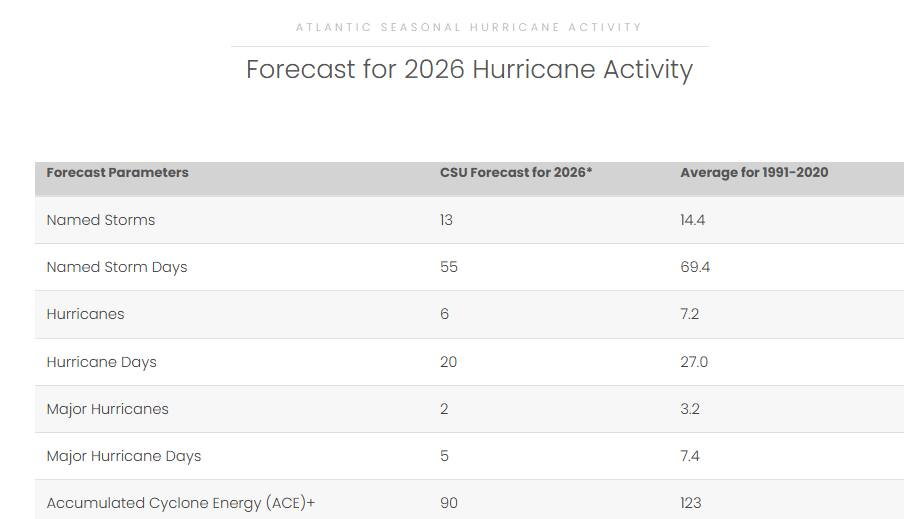
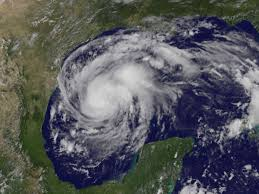

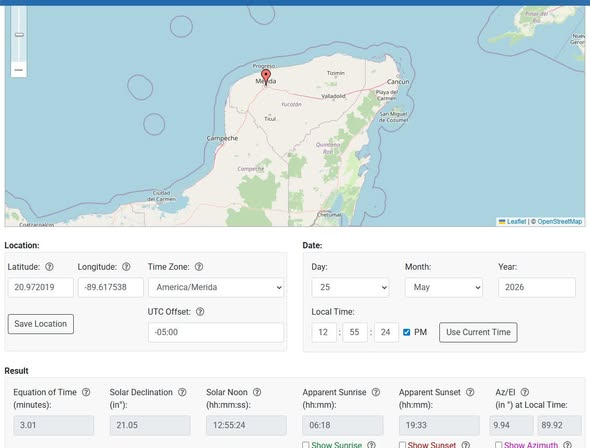
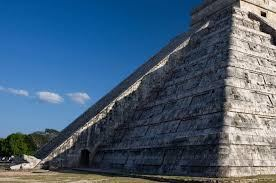


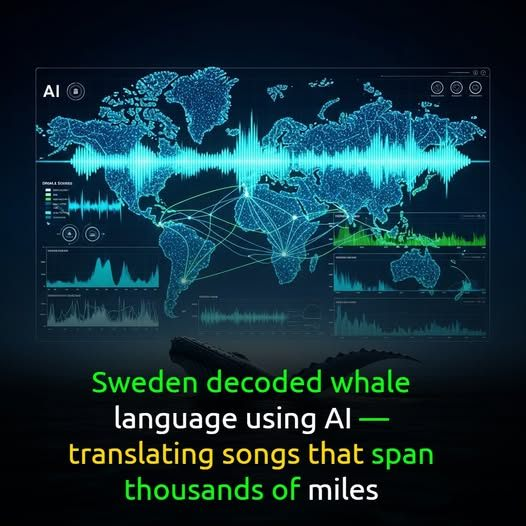

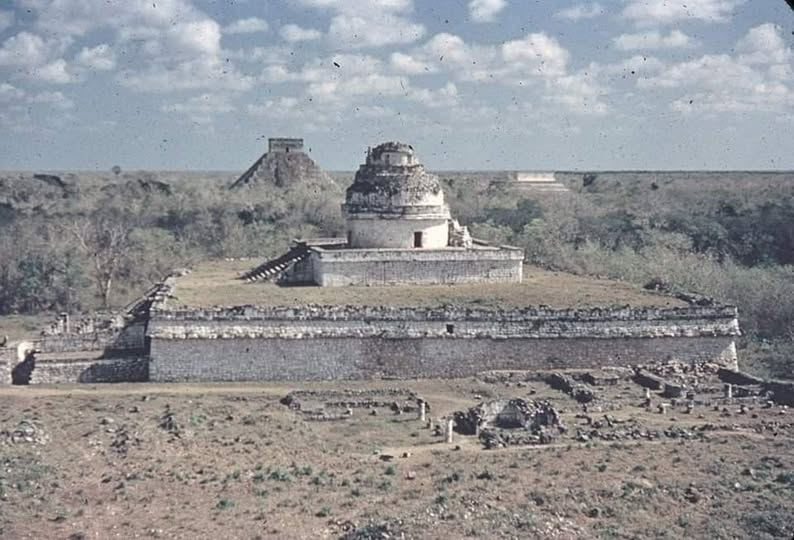

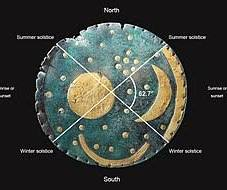
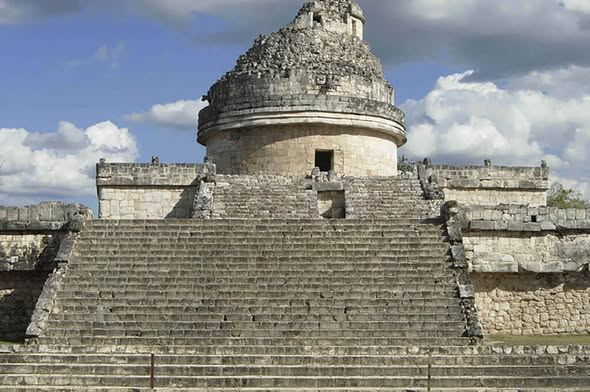
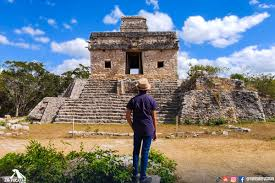
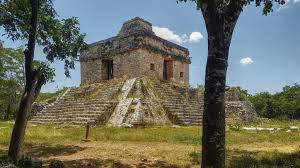









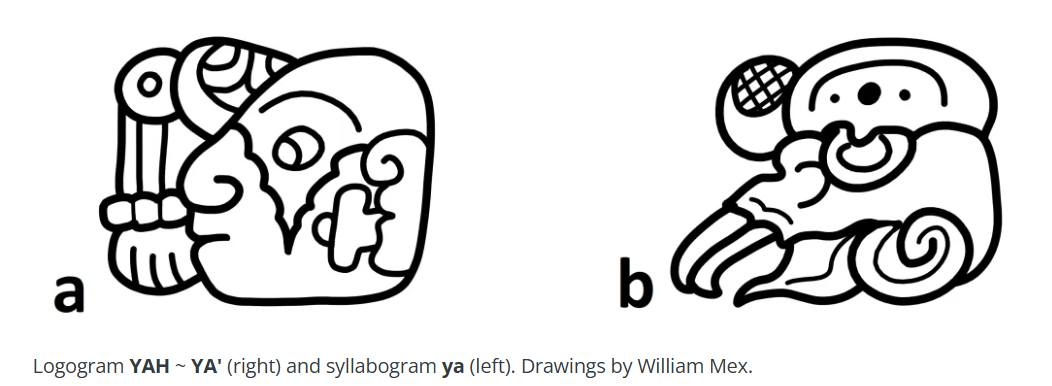





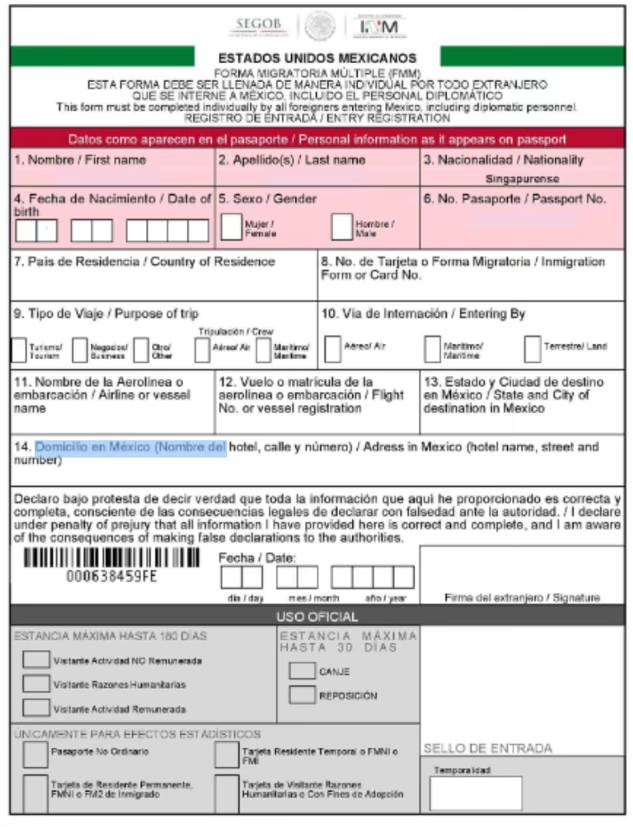
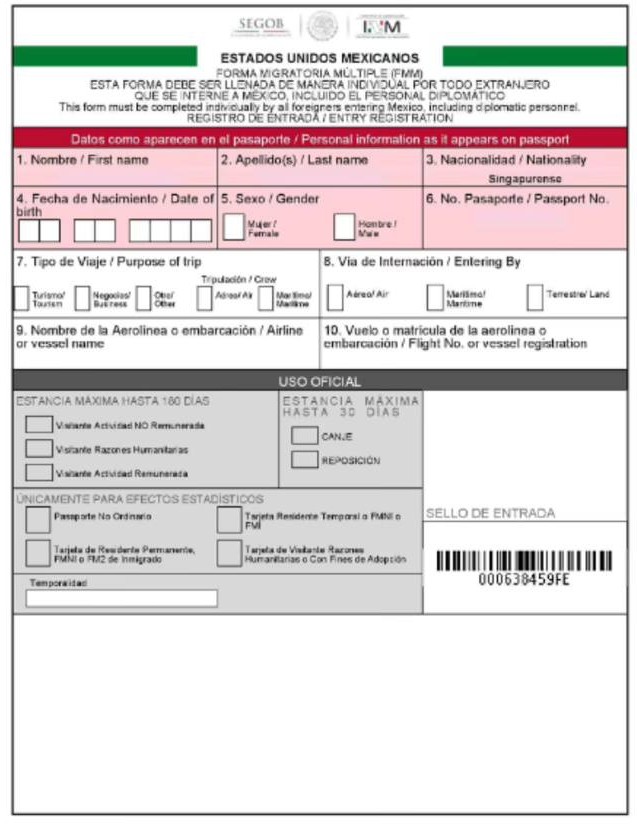


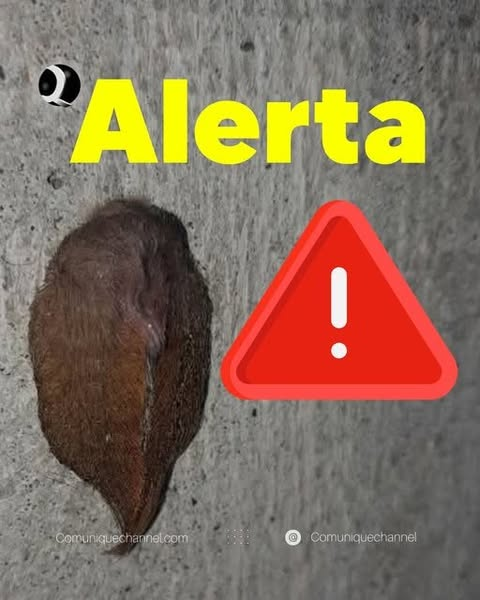







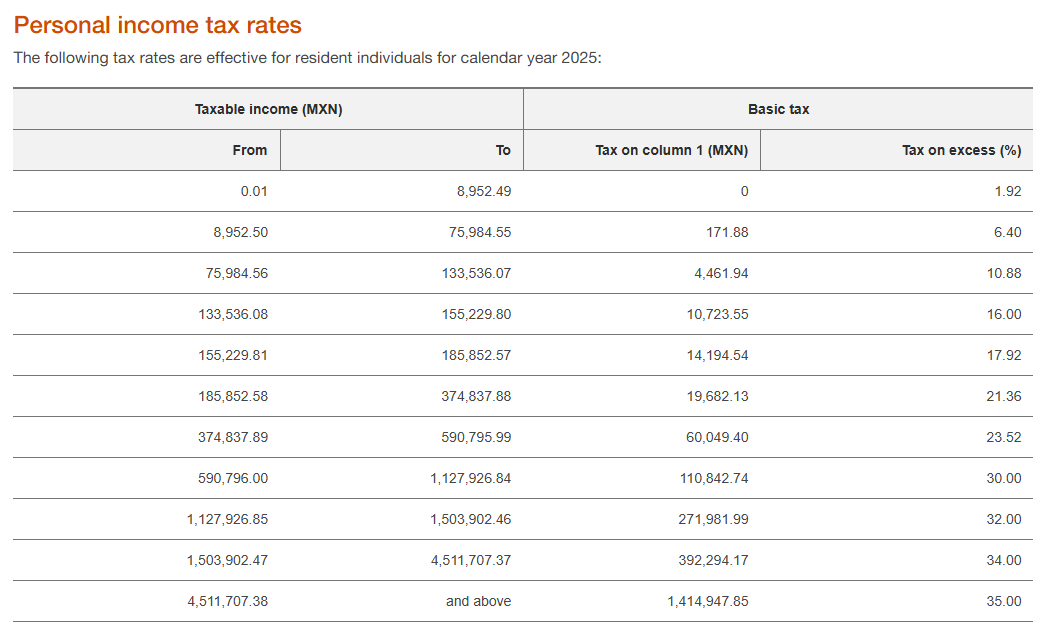






:quality(70)/cloudfront-us-east-1.images.arcpublishing.com/elfinanciero/CBKUPSQU7JBV7MLZLN3YPPAO6Q.PNG)