

March 5 update of Feb 26, 2025
One advantage of being in Social Media groups … is that we get to see what people are concerned about & thinking about from their questions … like :
What was the Maya Calendar ?
Seriously … there were & are at least 7 different Maya Calendars**
.… Just like we have multiple calenders today, like our solar calendar of 365 days in a year … plus our 7 named days of the week calendar (Sun Day, Moon Day, Thor’s Day, Friya’s day) to match the Jewish 7 day cycle … plus our Zodiac calendar (you know your Zodiac sign right?) … along with the named months of the year … with our 2-faced Janus (January) looking backward at the old year and forward to the new year … Mars- (March) God of War for marching to start new military campaigns … Maia (May) Roman God of Spring & new growth … etc.
**Similarly to all of our “modern” Calendars … The Maya have/had a Haab 365 day solar calendar of 18 months of 20 days per month +plus 5 extra days with no names. (but no leap day corrections – so this calendar gets way off from the sun’s actual day lengths & positions).
**The Maya also have/had a Tzolk’in Calendar 260 day religious(?) calendar of 13 months of 20 days per month,
**Next the Maya have the “Calendar Round” calendric system, which is a combination of the Tzolk’in day name with the Haab day name … where the Calendar Round has an overall 52 yr cycle, before the two day-name pairs repeats …
Credit and thanks to Sidney “Calman” Hollander for his Calendar Round image.
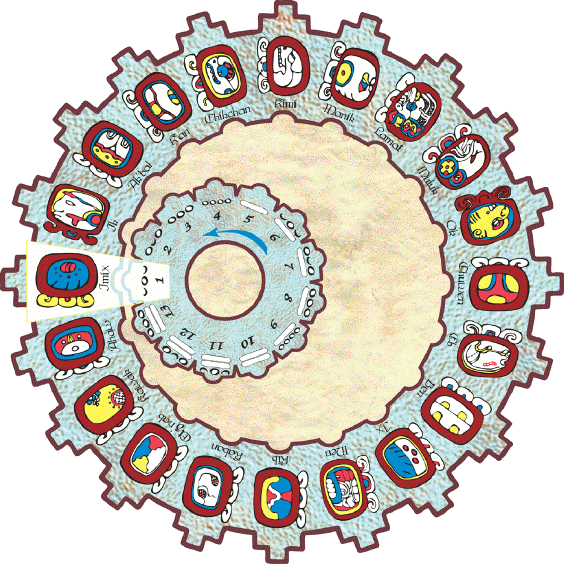
Continuing with the Calendar Round pairs of Tzolk’in Date Day Names +plus Haab Date Day Names, in one prominent example, when the LONG COUNT Calender (see below) for the new 0.0.0.0.1 starting Date when the Long Count finished it’s finished it’s last 2,880,000 day cycle… the NEW cycle’ s first 0.0.0.0.1 Long Count number … the corresponding CALENDAR ROUND day names were: 4-Ajau, 3-Kank’in … as the Tzolk’in Date name, followed by its Haab Date name … followed by its Lord of that Night = God 9 …
**Then the Maya had/have a 28 day LUNAR CALENDAR … that allows a person who knows their full Maya Birthdate, to also simultaneously know the phase of the moon on that night …
**AND the Maya have a running count of days … since Day 1 … named “Day 0.0.0.0.1” … (which was called 4-Ajau, 8-Kumku in Calendar Round dates) … The Maya LONG COUNT calendar counts the dayss linearly … which is the calendric cycle that ended on Dec. 21, 2012 when it hit 13.0.0.0.0
Here’s an example of a pair of glyphs from one Long Count date, from Palenque:
(Courtesy of FAMSI)
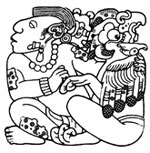
The best understanding is that Day 0 (or Day 1) of the Long Count started on August 11, 3114 BCE… So, the Maya’s Long Count Calendar cycle lasts 2,880,000 days, which Maya traditionalists consider a universal cycle. In modern terms, the Long Count cycle is equivalent to roughly 7,885 solar years … And yes, using the Maya Long Count calendar, you can quickly determine how many days you have been married to your spouse … by subtracting your Long Count Wedding Date number, from today’s Long Count number. 😉
… Yet, seriously, even our modern calendar systems don’t work well to determine: “How many days have I been alive?” … or “How many days until my birthday next year?” … while a sharp Maya priest could quickly answer these question.
AND
The Maya Calendar ALSO included a system of Days 0 – 9 for the “Lords of the NIGHT”

The 9 Lords of the Night glyphs are often called the “G’ Series”. Further note that every tun, k’atun and bak’tun since creation has ended with G9, the aged god of darkness and ‘night sun’, which are fitting ends to each block of time … Courtesy of Revista MesoAmerica.
AND
The Maya Calendar ALSO included a system of the visible cycles of Venus … which follow a 584 to 586 day cycle … where Venus spends roughly 263 days as the Evening Star … 50 days absent from our skies … followed by roughly another 263 days as the Morning Star …
SO
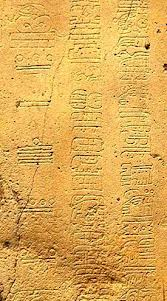
When a Mayan Shaman told a person their Birth Date … It started with the Calendar Round date (as the combination of the two Calendar dates of the Haab Calendar Day Name plus the Tzolkien Calendar Day name) plus a “Year Bearer” glyph, followed by their Long Count Calendar Date … followed by which Day Number of the 9 Lords of the Night the person was born on … followed by the phase of the moon as your Lunar Date when born … Followed by the phase of Venus as the Day number of the 584 day Venus Calendar of your birth date. … as shown in this example
and Yes, full credit on most of this goes to the fine mathematician, Sidney Hollander, who wrote the first computer program in the world to convert modern Gregorian Dates to full Mayan Dates back in the 1980’s … who is also the same professional “Calman” who worked at Chichen Itza from 1991 – 2004 as THE Maya Calendar expert for INAH
Credit & Thanks to Revista Mesoamerica
… and additional credit to Dr. Peter Schmid for some technical details in this report – as Peter was Regional Director for decades at INAH … for Yucatec Maya sites across the Yucatan Peninsula.
Our Dear Friend “Calman” Sid Hollander:
https://yucalandia.com/2022/05/30/sid-hollander-yucatans-loss-heavens-gain/

and our the delightful twinkly-eyed German friend … Dr. Peter Schmid
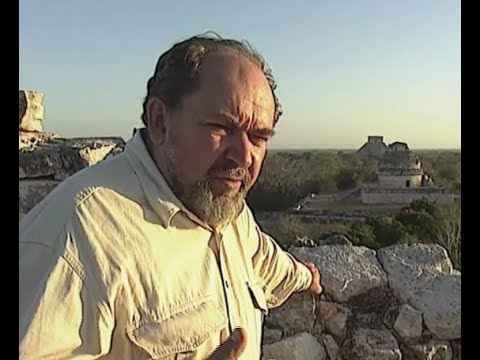
https://yucalandia.com/2023/09/03/chichen-viejo-finally-opens-after-6-years/
Descansa en Paz mis buen amigos …
Dr. Steven M. Fry
~ ~ ~ ~
March 5, 2026 Addendum:
**In response to good questions on the internet FB forums, we’re adding a few more details, to describe what all the glyphs are about on typical Maya Stelae:
Yeah, so very many Mayan glyphs are simply dates of key ceremonies or key births or key ascensions to thrones … dates that include the various glyphs from the 7 Mayan Calendars … generally including Haab, Tzolkien, Calendar Round and Long Count dates … which took a lot of glyphs to write out one specific date.
Each Long Count date took between 10 – 12 glyphs … and 4 glyphs for the Haab & Tzolkien dates, plus a Year Bearer glyph to finish out the Calendar Round Date … plus an “ISIG” glyph that described “Introduced” the Initial Series … summed to a typical minimum of 16 glyphs for a single date of an event.
and then … When the Maya included the Lords of the Night Glyph (G1 – G9) … and included date-position glyphs for the Maya VENUS Calendar … plus glyphs for the Maya Moon Calendar (describing phases of the moon on that night) …
a Maya simple single date of event could include over 20 glyphs** … 😉
SO … As a consequence of this, when Maya Stelae describe the key life events of some important person … they tended to write out ONLY his/her birthdate … and then ALL subsequent life-event dates would be described by a “distance number” saying :
” and blah-blah-blah (distance number) days after his/her birth … he/she did … “
So the stelae tend to have a lot of date-numbering glyphs, and day-date glyphs … which look really impressive to modern people … but they are little more than writing out:
“Today is Thursday, March 5’th, in the year 2026 of the Common Era of the Calendar of Pope Gregory, 2 days after the 3’rd Full Moon of 2026, with Venus being only briefly visible on the Southwest Horizon, just after sunset.”
and … “then 475 days later” a fresh new thing happened … like a wedding … or a birth of a child … or some important “Fire Ceremony” was performed.
🙂
~ ~ ~ ~
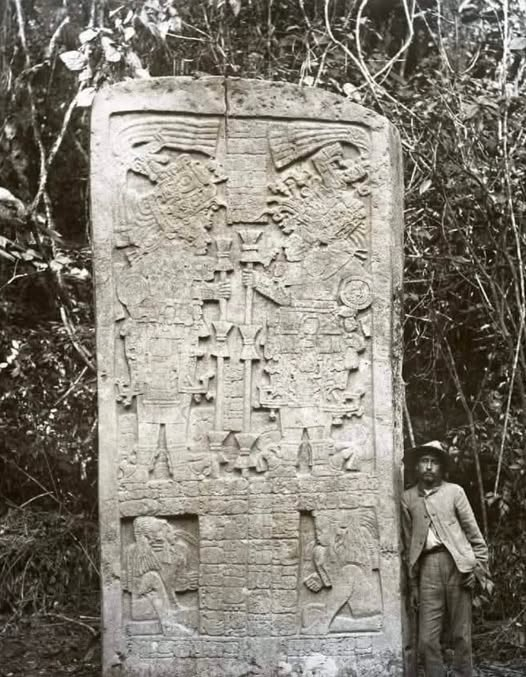
… And yes, the stela shown above is called This particular one is called “Stela 1”.
It is shared by the municipalities of Melchor de Mencos, Dolores, Poptún, and San Luis. Stela 1 of Ixkún (along with it’s companion Stela 2 of Sacul) record the visit of the ruler Ch’iyel of Sacul to dialogue with Rabbit God K of Ixkún in October 790 CE … Long Count 9.18.0.0.0.
According to the glyphs, the 2 rulers participated in a war against another, unidentified city. The glyphs then say that after this event, they performed a ritual of self-sacrifice to commemorate the end of a period.
…
Relationships with the Aztec’s calendars that copied the Maya systems?
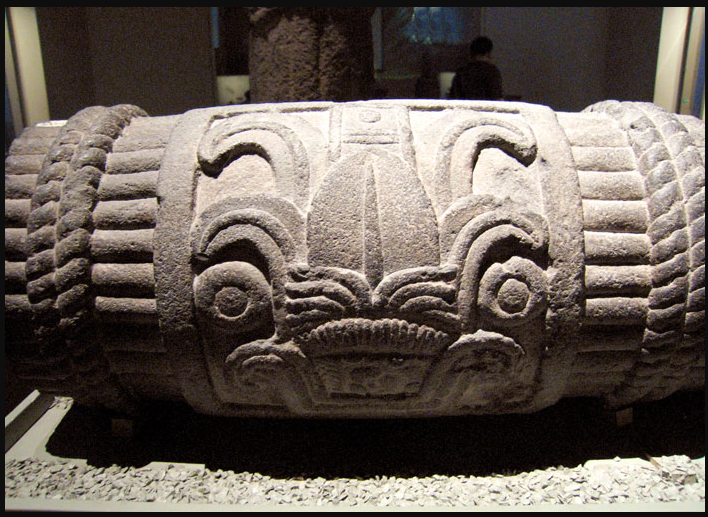
Start with this Aztec representation of the Aztec’s version of 52 yr Maya Calendar Round (Ha’ab & Tzolkin Calendars) … a 52 yr. that the Aztecs called “xiuhmolpilli” (bundle of years)… which included the Maya’s Ha’ab calendar, as the 52 weeks-long Aztec “xiuhpohualli’s” “year bundle”.
It can be important to recognize that the 2,000 years various ancient Maya cultures & language-groups (spanning from Chiapas through Yucatan, then across Belize, Guatamal & Honduras) basically had nothing to do with the short duration (200 yr.) late-Precolumbian rise of the Aztecs … from 1325 – just 1521.
As such, none of the various Maya cultures focused much on the 52 yr cycle that the article describes as supposedly central, as NONE of the 5 major Maya language & cultural groups even had a word for the Aztecs “xiuhmolpilli” … 52 weeks-long Aztec “xiuhpohualli’s” “year bundle”.
So, the Aztecs had some limited interactions with their Maya neighbors to the south … but the cultures were not integrated. Yes, the Aztecs had their 365 day “xiuhpohualli” 1-year bundle that copied the Maya’s 365 day Ha’ab cycle … and the Aztecs also copied the Maya’s 260 day tzolkin with their own 260 day “Tonalpohualli” cycle …
And as a further copy of Maya Calendrics, the Aztecs recognized their own 52 yrs Aztec “xiuhmolpilli” cycle of the combination (cross product) of both the tonalpohualli & the xiuhpohualli … to copy the Maya’s Calendar Round cycle of 18,980 days.
and the Aztecs also copied the Ihiyotl (nine night cycle) from the Maya’s Gods #1 – #9 as the Lords of the Night.
…
The Aztecs took the Maya Calendric systems (minus the Venus calendar), and put their own spiritual beliefs spin on the Maya Calendars:
“Among the Aztecs the most celebrated cycle of time, marked by the New Fire, consisted of 52 years, i.e. 13 times the journey of the 4 year-bearer signs – House, Rabbit, Reed, Flint. At the end of this period all fires were extinguished in houses, palaces and temples, for fear that the order established by the gods, and therefore the world as the Aztecs knew it, would collapse. During the New Fire ceremony… 52 bundles of reeds were burned and the same number bound together to form a ‘xiuhmolpilli’ (‘year bundle’). The Aztec oblong sculpture shown ABOVE … represents one such ‘xiuhmolpilli’. The main panel contains the date ‘2-Reed’, the year in which the New Fire ceremony took place… “
“The Aztec’s last (formal public) New Fire ceremony took place in 1507, 12 years before the arrival of the Spanish).”
‘Aztecs’, p. 441
Note that the Maya people did not have anything like this stone representation of the Aztec’s xiuhmolpilli 52 yr cycle of a complete Calendar Round cycle.
(As a final note, recognize that NEITHER the Aztecs NOR the Maya had any compensation for Leap Years … so their calendars would be off by a full month from the sun, every 120 yrs.)
Dr, Steven M. Fry
* * * *
Feel free to copy while giving proper attribution: YucaLandia/Surviving Yucatan.
© Steven M. Fry
Read on, MacDuff.

